
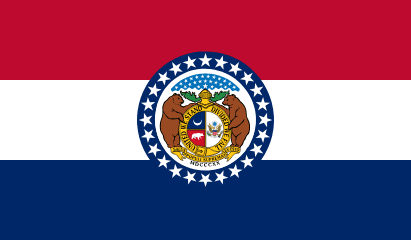
Missouri Poker Sites: Laws, Real Money Options and Where to Play
Missouri sits in an unusual spot on the U.S. poker map. The state runs 13 licensed casinos, several of which spread real live poker every day. It launched regulated online sports betting on Dec. 1, 2025. Daily fantasy sports have been legal since 2016. Yet there is still no such thing as a Missouri-licensed online poker site, and nothing in the 2026 legislative session moved the state any closer to one.

This guide from GamblingSitesUSA.com covers the entire Missouri poker picture as it stands in August 2026: what the statutes actually say, what happened in Jefferson City this year, which offshore poker rooms accept Missouri players, how sweepstakes poker works, where to find live poker in St. Louis and Kansas City, and what the new federal gambling tax rules mean for anyone who plays for money.
More Missouri Gambling Guides
This page covers online poker. Jump to the rest of our Missouri coverage:
Missouri Gambling Guide
The full legal picture and every option Missouri players can reach in one place.
Open guide →Missouri Online Casinos
Real-money online casinos and the legal picture for Missouri players.
Open →Missouri Online Sportsbooks
Legal and offshore sportsbooks, the latest odds, and how to bet in Missouri.
Open →Missouri Prediction Markets
Where prediction markets stand in Missouri and the sites that take residents.
Open →Missouri Sweepstakes Casinos
Sweepstakes casinos and the legal picture for Missouri players.
Open →All 50 States
Compare gambling laws and the best sites in every US state.
Browse states →Missouri Poker at a Glance
| Question | Answer |
|---|---|
| Is there a Missouri-licensed online poker site? | No |
| Is live poker legal in Missouri? | Yes, at the state’s licensed casinos |
| Is online sports betting legal? | Yes, launched Dec. 1, 2025 |
| Are sweepstakes poker sites available? | Yes |
| Do offshore poker sites accept Missouri players? | Yes |
| Are there tribal casinos in Missouri? | No |
| Number of licensed casinos | 13, a cap set by voters in 2008 |
| Casino and sports betting age | 21 |
| State regulator | Missouri Gaming Commission |
| Primary gambling statutes | Chapter 572 and Chapter 313, RSMo |
| Problem gambling helpline | 1-888-BETS-OFF (1-888-238-7633) |
Short Reviews: Poker Sites That Accept Missouri Players
Four offshore rooms take the bulk of Missouri traffic. Two of them, Ignition and Bovada, share one player pool. Two more, BetOnline and SportsBetting.ag, share a different one. None of them holds a Missouri license, and none of them is overseen by the Missouri Gaming Commission. Read the safety and legal sections further down this page before you deposit anywhere.
Ignition Poker
Accepts: Missouri playersIgnition launched in 2016 and runs on the PaiWangLuo Network, formerly known as the Bodog network, which is the largest player pool open to U.S. players. The room is built around recreational players. Every table is anonymous, so opponents show up as seat numbers rather than screen names, which breaks heads-up displays and long-term tracking databases. Cash-game multi-tabling is capped at four tables, third-party software is restricted and bumhunting is against the rules.
Zone Poker is the fast-fold format, moving you to a new hand the instant you muck. Cash stakes run from 2 cents/5 cents up to $10/$20 no-limit, with limit games going higher. The welcome package is split between poker and casino: crypto deposits trigger 150 percent up to $1,500 on each side for a combined $3,000, while card deposits get 100 percent up to $1,000 on each side. The poker portion releases gradually as you generate rake, not as an instant cash drop.
Best for: Recreational players and anyone who wants the softest, busiest U.S.-facing tables. Weak spot: Anonymous tables and blocked tracking software frustrate serious grinders, and the casino game library is thinner than rivals.
Bovada Poker
Accepts: Missouri playersBovada shares the exact same PaiWangLuo player pool as Ignition, which means identical tables, identical anonymity and identical Zone Poker. The difference is what surrounds the poker room. Bovada bolts on one of the longest-running sportsbooks open to U.S. players, plus a full casino and racebook, all on a single wallet. That sportsbook traffic feeds the poker tables, which is a large part of why the games play soft.
The trade-off is availability. Bovada, whose listed parent is Harp Media B.V. in Curacao, has been pushed out of a long list of states by cease-and-desist orders from state regulators. The pattern is consistent: a gaming commission sends a notice, Bovada never formally acknowledges it, and the state quietly appears on the blocked list weeks or months later. As of mid-2026 that list includes roughly 20 jurisdictions, among them Arizona, Colorado, Connecticut, Delaware, Kansas, Louisiana, Maryland, Massachusetts, Michigan, Nevada, New Hampshire, New Jersey, New York, Ohio, Pennsylvania, Tennessee, West Virginia and Washington, D.C.
Missouri is not currently on that list. It is worth remembering that most of the states on it are states that regulate online gambling, and Missouri joined the regulated column in December 2025.
Best for: Players who want poker, sports and casino in one account. Weak spot: The state availability risk is real and the list only moves in one direction.
BetOnline Poker
Accepts: Missouri playersBetOnline has been online since 2004 and is the flagship skin of the Chico Poker Network, the third-largest pool serving U.S. players. It shares that pool with SportsBetting.ag and TigerGaming, and combined Chico traffic peaks north of 3,000 concurrent players during North American evening hours.
Where BetOnline separates itself from the PaiWangLuo rooms is transparency. Screen names are visible and third-party tracking software is not blocked, so PokerTracker and Hold’em Manager work with Chico hand histories. Game selection is broader than most offshore rooms, including five-card and six-card pot-limit Omaha, six-plus hold’em, Boost fast-fold tables and Windfall lottery sit-and-gos. Bad beat jackpots run at essentially every blind level. The Championship Online Poker Series carries guarantees in the millions across the network’s skins.
The welcome offer is a straightforward 100 percent poker match up to $1,000 that releases in fixed increments as you pay rake, with a separate crypto bonus and a weekly rakeback program available on top.
Best for: Regular players who want visible opponents, HUD support and Omaha variety. Weak spot: Traffic is thinner than PaiWangLuo, and card deposits carry meaningful fees.
SportsBetting.ag Poker
Accepts: Missouri playersSportsBetting.ag is the sister skin to BetOnline. Same Chico Network, same player pool, same Connective Games client, same tournament schedule. If you sit down at a $1/$2 table on SportsBetting.ag, the players across from you may well be logged in through BetOnline or TigerGaming. The functional differences come down to branding, the current promotion and the color scheme.
The room leans harder into its sportsbook identity than BetOnline does, and that matters at the tables. A significant share of the poker traffic arrives from the sports side, which skews the lineups recreational. Everything runs on a single wallet, so a winning parlay is immediately available as a buy-in.
The standard welcome offer is a 100 percent poker match up to $1,000 on a qualifying first deposit, released incrementally against rake. Promotions here rotate more aggressively than at BetOnline, and periodic offers add step satellite tickets toward the network’s large Sunday tournaments.
Best for: Sports bettors who also play poker, and anyone who finds a better current promo here than at BetOnline. Weak spot: There is no strategic reason to choose it over BetOnline other than the bonus, and live chat support has historically been gated behind account balance requirements.
How These Four Compare
| Site | Network | Anonymous tables | HUD allowed | Fast-fold format | Headline poker bonus |
|---|---|---|---|---|---|
| Ignition | PaiWangLuo | Yes | No | Zone Poker | 150 percent to $1,500 (crypto) |
| Bovada | PaiWangLuo | Yes | No | Zone Poker | 150 percent to $1,500 (crypto) |
| BetOnline | Chico | No | Yes | Boost | 100 percent to $1,000 |
| SportsBetting.ag | Chico | No | Yes | Boost | 100 percent to $1,000 |
Bonus terms, deposit methods and state availability change without notice at offshore operators. Confirm the current offer and confirm that your state is accepted before you fund an account.
Are Online Poker Sites Legal in Missouri?
No online poker site is legal in the sense that matters most, which is licensed and regulated by the state of Missouri. The Missouri Gaming Commission does not license internet poker rooms or online casinos, and it has publicly warned that any site claiming otherwise should be treated as suspect. PokerStars, WSOP Online, BetMGM Poker and BetRivers Poker, all of which operate legally in other states, are not available to Missouri players.
A lot of affiliate pages will tell you that playing on an offshore site is flatly legal in Missouri because no law prohibits it. That is not accurate, and it is worth understanding why before you put money online.
What Section 572.020 Actually Says
Under Section 572.020 of the Revised Statutes of Missouri, a person commits the offense of gambling if he or she knowingly engages in gambling. That offense is a class C misdemeanor. It rises to a class A misdemeanor if committed by a “professional player,” and to a class B misdemeanor if the person knowingly gambles with a child under 17.
There is no carve-out in that statute for internet play, for offshore operators or for games of skill. Missouri’s definition of gambling in Section 572.010 is broad: staking or risking something of value on the outcome of a contest of chance or a future contingent event not under your control, on an agreement that you will receive something of value on a certain outcome. A “contest of chance” is defined as any contest or game in which the outcome depends in a material degree on chance, notwithstanding that skill may also be a factor. Poker involves substantial skill, but chance plainly matters in a material degree, which is why the skill argument has never been a reliable defense in Missouri.
The Honest Practical Picture
Statutory exposure and actual enforcement are two different things. There is no record of Missouri prosecuting an individual for playing poker on an offshore website. Missouri’s enforcement energy has always gone toward operators, hosts and device suppliers rather than players, and the statutory scheme reflects that: Section 572.010 defines “advancing gambling activity” to cover anyone who, acting other than as a player, materially aids gambling activity. Promoting gambling in the first and second degree under Sections 572.030 and 572.040 carry far heavier penalties than the player offense.
Missouri’s “Professional Player” Rule
Missouri is one of very few states that treats amateur and professional gamblers differently in its criminal code. Section 572.010 defines a professional player as one who gambles for a livelihood or who has derived at least 20 percent of income in any one year within the past five years from acting solely as a player. Meeting that definition raises a gambling charge from a class C to a class A misdemeanor. A class C misdemeanor in Missouri carries up to 15 days in jail and a fine of up to $750. A class A misdemeanor carries up to a year in jail and a fine of up to $2,000.
Home Poker Games in Missouri
Missouri does not have a clean, explicit social gambling exemption the way some states do. What it has is a definitional one. Section 572.010 provides that a person who gambles at a social game of chance on equal terms with the other participants does not, by that fact alone, render material assistance to the gambling activity. In plain terms, hosting a game you are also playing in, on the same terms as everyone else, does not automatically make you an operator.
The line gets crossed the moment the host takes a cut. Rake, a seat fee, a door charge or any other form of profit from running the game moves the host from player to operator, and operator offenses are where the serious penalties live. Enforcement against small private home games is rare, but the statute does not affirmatively bless them.
The Section 313.800 Skill Definition
Researching Missouri poker law, you will eventually find Section 313.800, which lists poker among games of skill. This is a definition written for the regulated riverboat casino framework in Chapter 313. It authorizes licensed casinos to spread poker. It does not carve poker out of the Chapter 572 criminal definition of gambling, and it has no application to unlicensed games or to internet play.
Missouri’s Gambling Loss Recovery Statutes
Two old Missouri statutes are worth knowing about. Section 434.030 provides that a person who loses money or property at any game, gambling device, bet or wager may recover it by civil action. Section 434.040 extends the same remedy to the heirs, executors, administrators, spouse and creditors of the losing party. These provisions apply to unlawful gambling and are essentially never used against offshore internet operators, who are outside the practical reach of a Missouri civil judgment, but they remain on the books and are part of why unlicensed gambling contracts are unenforceable in Missouri.
Legal Gambling Ages in Missouri
- Casino gambling, including live poker rooms: 21
- Sports betting, retail and online: 21
- Missouri Lottery: 18
- Charitable bingo: 16, with restrictions on participation
- Daily fantasy sports: 18
Offshore poker sites typically set their own minimum at 18, and sweepstakes platforms vary between 18 and 21. Those private terms do not change Missouri law, and no legitimate site will let a minor cash out.
Federal Law and Missouri Online Poker
Federal law shapes the online poker market in the United States, but it does so almost entirely at the operator and payment-processing level.
The Wire Act
The Interstate Wire Act of 1961 prohibits using wire communication facilities to transmit bets on sporting events or contests across state lines. In 2011 the Department of Justice’s Office of Legal Counsel issued an opinion concluding the Wire Act applies only to sports wagering, which opened the door to state-regulated online poker and casino gaming. In 2018 DOJ reversed that position. New Hampshire challenged the reversal, and in January 2021 the U.S. Court of Appeals for the First Circuit held that the Wire Act reaches only sports betting. DOJ did not seek Supreme Court review. The practical result is that the Wire Act is not an obstacle to a state legalizing online poker.
UIGEA
The Unlawful Internet Gambling Enforcement Act of 2006 does not make playing online illegal and does not create a new category of illegal gambling. It prohibits gambling businesses from knowingly accepting payments connected to unlawful internet gambling, and it directs financial institutions to identify and block those transactions. UIGEA is the reason your bank may decline a card deposit to an offshore poker site. It is not a law aimed at you.
The Illegal Gambling Business Act
The IGBA makes it a federal offense to conduct a gambling business that violates state law, involves five or more people and either operates for more than 30 days or grosses $2,000 in a single day. Like UIGEA, it targets operators. It has been used against offshore payment processors and against domestic operators of illegal betting rings.
No Federal Law Targets Individual Players
There is no federal statute that criminalizes an individual for playing poker online. Every meaningful legal question for a Missouri player is a question of Missouri law, and the answer there is the one set out above: unauthorized, effectively unenforced against players, entirely unprotected.
Interstate Compacts and Why Missouri Is Not in One
The Multi-State Internet Gaming Agreement lets member states combine their regulated online poker player pools. Nevada and Delaware created it in 2014. New Jersey joined in 2017, Michigan in 2022, West Virginia in 2023 and Pennsylvania in April 2025, making Pennsylvania the largest member. Six states now share a pool covering more than 38 million people. Connecticut has explored joining.
A state has to legalize and regulate online poker before it can join. Missouri has not, so the compact is irrelevant to Missouri players today. It matters for the future: if Missouri ever authorizes online poker, MSIGA membership is what would make the market viable rather than a ghost town of empty tables.
What Forms of Gambling Are Legal in Missouri Today
Online and Retail Sports Betting
Missouri voters approved Amendment 2 on Nov. 5, 2024, by one of the narrowest margins in the state’s history: 50.05 percent to 49.95 percent. The amendment directed the Missouri Gaming Commission to license sports wagering and required the market to launch no later than Dec. 1, 2025.
It got there on the last possible day. The commission’s proposed emergency rules were rejected by the secretary of state in early 2025, pushing the timeline back, and the full rulemaking process ran through the summer. Betting went live statewide Dec. 1, 2025, with eight mobile operators on day one: DraftKings, FanDuel, BetMGM, Caesars, bet365, Fanatics, Circa Sports and theScore Bet. Missourians wagered just over $543 million in the first month.
Amendment 2 allows up to 14 online licenses: six tied to the state’s casino operators, six to Missouri professional sports teams and two untethered licenses issued directly by the commission. It set a 10 percent tax on wagering revenue directed to education, and it dedicated funding to the Compulsive Gambling Prevention Fund. The minimum age is 21.
Daily Fantasy Sports
Missouri legalized and regulated DFS in 2016. Contests remain available statewide. Missouri has prohibited house-versus-player DFS contests while peer-to-peer pick’em style games continue to operate.
Casinos
Thirteen licensed casinos operate in Missouri, the maximum allowed under the cap voters approved through Proposition A in 2008. That same measure repealed Missouri’s unusual loss limit, which had capped buy-ins at $500 per two-hour period and made Missouri an outlier among casino states for years.
Lottery and Charitable Gaming
The Missouri Lottery has operated since 1986. Licensed charitable organizations may conduct bingo and raffles under Chapter 313.
Still Prohibited
Online casino games and real money online poker remain unauthorized. Missouri has never licensed either, and the 2026 session did not change that.
The Future of Online Poker in Missouri
What Happened in the 2026 Session
The Missouri General Assembly adjourned May 15, 2026. No online casino or online poker bill advanced. The gambling fight that consumed the session was about video lottery terminals, not the internet.
House Bill 2989 would have authorized the Missouri Lottery to license as many as eight video lottery terminals per location in gas stations, bars and similar retail businesses. The House passed it narrowly in February 2026 after adding amendments including a $250 annual per-machine fee for disability services, a 3 percent tax on video lottery profits for local governments and an increase in the casino admission fee from $2 to $4 per patron. Machines would have been required to return at least 80 percent of wagers as prizes, and companies running unregulated machines would have had one year to withdraw them.
It died on May 6, 2026, when the bipartisan Senate Select Committee on Gaming voted 5-0 against it. Senate President Pro Tem Cindy O’Laughlin, who created and chairs that committee, has been consistently opposed and made an argument that matters directly to the online poker question: expanding gambling in Missouri should go to voters, not through the legislature. Sen. Stephen Webber, voting no from the other side of the aisle, said his views on gambling had hardened and that the state cannot build itself on sin taxes.
Video lottery terminals were, along with property tax reform, one of the two highest-profile priorities that failed to reach the governor’s desk in 2026.
The Attorney General’s Crackdown Changes the Backdrop
The most consequential Missouri gambling development of 2026 did not happen in the legislature at all.
In February 2026 a federal court ruled that slot-style machines operating outside licensed casinos violate Missouri’s gambling statute, rejecting the gray-market theory those machines had operated under for years. In March, Jackson County Prosecutor Melesa Johnson announced a joint enforcement push with the attorney general’s office and set a July 1 deadline for businesses to remove the devices.
On April 8, 2026, Attorney General Catherine Hanaway announced that Torch Electronics, identified by the state as Missouri’s largest distributor of unlicensed gambling devices, had agreed to suspend all operations effective April 10 to avoid criminal prosecution. The investigation was run jointly with the U.S. attorneys for both the Eastern and Western Districts of Missouri. Hanaway’s framing was pointed: “There has never been a gray market.”
By mid-2026, Hanaway estimated roughly 17,000 of the approximately 25,000 unregulated machines statewide had gone dark, about 68 percent. Her office said investigations into other companies, store owners and operators were continuing.
For anyone reading this page, the relevance is straightforward. Missouri now has a regulated online betting market to protect, a court ruling rejecting gray-market reasoning, an attorney general willing to shut down a politically connected operation in a matter of days, and federal prosecutors participating. Whether that attention eventually turns toward offshore poker sites or sweepstakes platforms is unknown. It would not require a new statute.
The Ballot Route and Amendment 4
Missouri’s recent history says gambling expansion passes at the ballot box, not in the Senate. Sports betting failed repeatedly in the legislature before a coalition of professional sports teams and betting operators took it directly to voters through Amendment 2. Senate leadership has explicitly pointed to that route for future expansion.
That route may narrow. Amendment 4 would require citizen-initiated constitutional amendments to win a majority in all eight of Missouri’s congressional districts rather than a statewide majority. Amendment 2 passed statewide by roughly 7,500 votes and would almost certainly have failed such a test. Amendment 4 would not change a single gambling statute by itself, but it would substantially change the arithmetic for any future petition drive to legalize online casino gaming or online poker in Missouri.
Realistic Outlook
Regulated online poker in Missouri is unlikely in the near term, for several stacked reasons:
- No online casino bill has gained meaningful traction in Missouri since HB 1364 in 2021, which proposed a framework for online casino gaming alongside sports betting and died in committee.
- In every U.S. market, online poker arrives as a component of online casino legislation rather than on its own. Missouri would need to pass iGaming first.
- The Senate has demonstrated it will kill even modest gambling expansion, and the chamber’s gatekeeper on the issue prefers referendums to bills.
- Nationally, 2026 has been a cleanup year rather than an expansion year. Maryland’s iGaming bill expired without a floor vote and Virginia’s collapsed late in the session.
- The initiative petition route, which is how Missouri actually legalizes gambling, faces a possible new supermajority-by-district requirement.
If it does eventually happen, expect it to look like the sports betting model: licenses tethered to the existing 13 casinos and possibly the professional sports teams, oversight by the Missouri Gaming Commission, education-directed tax revenue, mandatory self-exclusion integration and a 21-and-over age floor. Joining MSIGA would be essential for the poker vertical to work at Missouri’s population.
How Offshore Poker Sites Work
The rooms accepting Missouri players are incorporated and licensed outside the United States, most commonly in Curacao, Anjouan, Panama or Antigua. They accept U.S. customers because U.S. federal law imposes its penalties on gambling businesses and payment processors, and those entities sit outside the practical reach of American courts.
What that licensing does and does not mean is important. An offshore license means the operator has satisfied a foreign regulator’s requirements and, in most cases, submitted its random number generator to a testing lab. It does not mean segregated player funds under U.S. rules, a bonded payout guarantee, an American dispute resolution process or any obligation to answer to the Missouri Gaming Commission.
The Networks
Nearly all U.S.-facing traffic runs across three networks.
- PaiWangLuo Network: Formerly the Bodog network. Powers Ignition and Bovada. Largest U.S.-facing pool. Anonymous tables, restricted third-party software, Zone Poker fast-fold.
- Chico Poker Network: Powers BetOnline, SportsBetting.ag and TigerGaming. Third-largest U.S.-facing pool. Visible screen names, HUD support, Boost fast-fold, wide Omaha selection.
- Winning Poker Network: Powers Americas Cardroom and sister skins. Known for large guaranteed tournament series.
Because skins share pools, choosing between two skins on the same network is purely a question of which promotion is better at the moment. The games are literally the same games.
Deposits and Withdrawals
Cryptocurrency
Crypto is the default recommendation at every offshore room, and the reasoning is practical rather than ideological. Bitcoin, Ethereum, Litecoin and stablecoins such as USDT and USDC typically carry no operator-side fees, are not subject to bank declines and process withdrawals fastest, often within a day. Most cashiers now support a dozen or more coins. Litecoin and stablecoins usually mean lower network fees than Bitcoin.
If you have never bought crypto, you will need an exchange account, identity verification and a transfer to the poker site’s deposit address. Build in time for that before a series you want to play.
Cards
Visa, Mastercard, American Express and Discover are accepted at most offshore rooms, and all of them come with friction. Decline rates are high because of UIGEA-driven bank blocking, processing fees are steep, and card deposits usually qualify for a smaller welcome bonus than crypto. Cards also cannot be used for withdrawals, so you will need a second method to get paid.
Other Methods
Bank wires, courier checks, player-to-player transfers and voucher systems are available at various rooms. Wires and checks are slow, often carry fees and typically have high minimums. Vouchers are a useful way to move a balance between players without touching the banking system.
Practical Payout Advice
- Complete identity verification before your first withdrawal request, not after. Unverified accounts are the single most common cause of payout delays.
- Use the same method to withdraw that you used to deposit wherever the site allows it.
- Clear any pending bonus requirements before requesting a cashout.
- Do not let a large balance sit on an offshore site. Withdraw regularly and keep your online bankroll to what you actually need.
Poker Bonuses and Promotions
How Poker Welcome Bonuses Release
Poker bonuses do not work like casino bonuses. There is no wagering requirement in the usual sense and no instant cash. The bonus sits in a pending balance and releases in fixed increments as you generate rake at real money tables. Play more, unlock more. Stop playing, and the unreleased portion expires, typically after 30 days.
This matters when you evaluate a headline number. A $1,000 bonus that requires several thousand dollars in rake to fully clear is worth what you actually unlock, not what the banner says. Micro-stakes players clear a small fraction of large offers.
Split Poker and Casino Packages
Ignition and Bovada advertise combined figures up to $3,000 that are actually two separate bonuses, half poker and half casino, with different clearing mechanics. The poker half releases against poker rake. The casino half carries a wagering requirement, commonly 25 times. If you never intend to play slots, the real number you should compare is the poker half alone.
Ongoing Value
- Rakeback and loyalty: Chico rooms run a tiered weekly rakeback program. PaiWangLuo rooms use a points-based rewards system.
- Reload bonuses: Periodic deposit matches for existing players, often crypto-specific.
- Freerolls: No-buy-in tournaments with real prize pools, often the best expected value on offer for small bankrolls.
- Bad beat jackpots: Chico runs progressive bad beat jackpots at essentially every stake level.
- Tournament series: Chico’s Championship Online Poker Series has carried guarantees in the millions across skins. PaiWangLuo runs weekly guarantees measured in the seven figures along with a recurring monthly six-figure main event.
Terms to Read Before Depositing
- The rake-to-bonus release ratio and the expiration window
- Whether the crypto and card versions of the offer differ
- Minimum qualifying deposit
- Whether a bonus code must be entered at deposit time
- Maximum cashout limits attached to any no-deposit or free-play offer
Games, Formats and Traffic
Missouri players get the same lobbies as everyone else on these networks. Typical offerings:
- No-limit hold’em: The overwhelming majority of cash traffic, from 2 cents/5 cents up to $10/$20 at the busiest rooms.
- Pot-limit Omaha: Well populated on Chico in particular, including five-card and six-card variants.
- Omaha hi-lo and fixed limit: Available, thinner, with limit games running as high as $30/$60 on PaiWangLuo.
- Fast-fold: Zone Poker on PaiWangLuo, Boost on Chico. You are moved to a new table and a new hand the moment you fold, which roughly triples hands per hour.
- Jackpot sit-and-gos: Three-handed hyper-turbo formats with randomized prize multipliers, called Windfall on Chico.
- Multi-table tournaments: Daily schedules across all price points, with the largest guarantees on Sundays.
Traffic on U.S.-facing networks peaks between roughly 7 p.m. and midnight Central time, which is convenient for Missouri players. That window is also when the games play softest, because recreational players and casino or sportsbook crossover traffic are most active. Weekend evenings are the peak of the peak.
Mobile Poker in Missouri
Missouri Mobile Poker
Browser-based play in your pocket.
Cash games, sit-and-gos and tournaments on Safari or Chrome.
Save a home-screen shortcut so it behaves like an app.
You will not find these poker rooms in the Apple App Store or on Google Play. Both stores prohibit real money gambling apps that lack the appropriate licensing for the user’s jurisdiction, and no offshore operator holds a Missouri license.
What you get instead is a browser-based mobile client. Open the site in Safari or Chrome, log in, and play through the browser. Most rooms let you save a shortcut to your home screen so it behaves like an app. On iOS, use the share menu and select Add to Home Screen. On Android, use the browser menu and select Add to Home Screen or Install App.
Mobile clients handle cash games, sit-and-gos and tournaments, plus deposits and withdrawals. What they do not handle well is volume. Expect one to two tables comfortably, versus four or more on desktop. Grinders should treat mobile as a supplement rather than a primary platform. Play on a stable Wi-Fi connection where you can, since a dropped connection during a tournament will blind you off.
Safety and Security
What Legitimate Offshore Rooms Do Provide
- SSL and 256-bit encryption on account data and transactions
- Random number generators submitted to independent testing laboratories
- Long operating histories, in BetOnline’s case dating to 2004 and in the case of the PaiWangLuo network, more than two decades of continuous operation
- Documented payout track records that can be independently checked in player communities
- Basic account security tools including two-factor authentication at most rooms
What They Do Not Provide
- Any oversight by the Missouri Gaming Commission or any U.S. regulator
- A dispute process you can appeal to if the operator rules against you
- Segregated player fund requirements enforceable in a U.S. court
- Integration with Missouri’s Disassociated Persons or Self-Excluded Persons lists
- Any guarantee that your account will remain accessible if the site exits your state
Game Integrity Questions
Two concerns come up repeatedly and both deserve honest treatment. Anonymous tables protect recreational players from being targeted, but they also make it impossible for the player community to identify suspicious accounts, which is why bot allegations cluster around anonymous fast-fold pools at mid and high stakes. Collusion is harder to detect on any unregulated site than on a licensed one, because you cannot subpoena hand histories and there is no regulator conducting audits.
None of that means the games are rigged, and there is no credible evidence that the major rooms deal unfair cards. It does mean that your protection against other players cheating is whatever the operator’s internal security team provides, and you have no way to verify it.
Warning Signs
- A brand with no operating history and no reviewable payout record
- Bonus terms with unusually high maximum cashout caps or vague clearing rules
- No published licensing information anywhere on the site
- Support that is unreachable or gated behind a balance requirement
- Reports of slow-rolled withdrawals in player forums, which is almost always the first symptom of a failing operator
Using Offshore Poker Sites in Missouri: The Real Risks
The Site Leaving Missouri
This is the most likely thing to actually go wrong, and it has a well-documented pattern. A state gaming regulator sends a cease-and-desist notice. The operator does not acknowledge it. Weeks or months later the state appears on the site’s restricted list and residents can no longer log in to play. Bovada has been through this repeatedly, and states have paired notices with fines, including $50,000 in Tennessee, which offshore operators generally do not pay.
What happens to your balance when a site exits varies. Most operators allow withdrawals during a wind-down window. Some players report account closures, and some report funds being difficult to recover. There is no Missouri regulator to appeal to in any of these cases. Missouri now has a regulated online betting market to protect, which historically is the strongest predictor of a state issuing cease-and-desist orders.
Do Not Use a VPN
Using a VPN to disguise your location violates the terms of service at every one of these operators. Enforcement is a coin flip until it is not, and the enforcement mechanism is account closure with funds confiscated. Players report logging in fine in one location and finding themselves locked out in another. If a site does not accept your state, do not attempt to work around it.
Banking Friction
Card declines are routine. Some banks flag crypto exchange purchases connected to gambling. None of this is illegal on your end, but it is inconvenient, and it is the reason experienced offshore players standardize on crypto.
Taxes
Offshore rooms do not issue W-2Gs and do not report to the IRS. Your winnings are still taxable income. See the tax section below, which matters more in 2026 than it has in decades.
Sweepstakes Poker in Missouri
How the Model Works
Sweepstakes poker sites operate under promotional sweepstakes law rather than gambling law. The traditional structure uses two currencies. You buy a play-money currency, commonly called Gold Coins, which has no cash value. The purchase includes a free bonus of a second currency, commonly called Sweeps Coins, which can be played and then redeemed for cash prizes. Crucially, the redeemable currency can always be obtained free, typically through a daily login bonus, a social media promotion or a mail-in request. That no-purchase-necessary path is what removes the element of consideration that Missouri’s gambling definition requires.
Because these platforms are peer-to-peer poker rather than house-banked casino games, they have also fared better than sweepstakes casinos in states that have moved against the model.
What Is Available in Missouri
Global Poker is the largest sweepstakes poker platform in the country. Founded in 2016 by Australian operator VGW Holdings, it uses the Gold Coins and Sweeps Coins structure and offers true cash-game formats alongside tournaments, which makes it the closest available approximation to a real money poker room. It is available in Missouri and excluded from a handful of states including Connecticut, Delaware, Idaho, Michigan, Montana, Nevada, New York and Washington. It is browser-based, and prize redemption typically takes several business days.
ClubWPT Gold is the World Poker Tour’s sweepstakes poker room and is available in Missouri. It relaunched in late 2025 with a restructured model built on Hand Analysis Credits, where each dollar of credits delivers a matching Chip balance at a one-to-one ratio and each Chip carries a $1 redemption value. The minimum redemption is 20 Chips, the lowest floor in the category. Rake is 4 percent across all stakes, ring games run from 0.02/0.05 up to 25/50 Chips, and the platform is eCOGRA-certified for RNG fairness, which sweepstakes platforms are not required to be. Its acquisition of Upswing Poker turned it into a hybrid poker and training product, with a solver-based tool that grades your decisions. As of mid-2026 it is restricted in Connecticut, Louisiana, Michigan, Montana, New Jersey, Tennessee and Washington.
ClubWPT is the older, subscription-based World Poker Tour product and is also available in Missouri. It offers a narrower tournament-focused experience.
Sweepstakes Versus Offshore
| Sweepstakes poker | Offshore poker | |
|---|---|---|
| Legal footing in Missouri | Sweepstakes law, generally accepted | Unauthorized and unregulated |
| Free entry available | Yes, by law | No |
| Stakes available | Low to mid | Micro to high |
| Traffic | Moderate | Higher |
| Redemption speed | Days | Hours to days with crypto |
| Payment methods | Cards, Apple Pay, Google Pay | Crypto preferred |
The Regulatory Cloud
Sweepstakes gaming is under sustained pressure nationally. Roughly 27 states considered gambling-related bills in 2026, and several enacted or advanced sweepstakes prohibitions. New Jersey and California have moved against the model, Mississippi’s Senate passed a bill expanding criminal statutes to explicitly cover sweepstakes platforms, and Iowa authorized its regulator to issue cease-and-desist letters. Indiana’s ban, effective July 1, 2026, is notable for carving out peer-to-peer skill-based poker, which is why Global Poker and ClubWPT Gold remain available there while sweepstakes casinos exited.
Missouri has not introduced a sweepstakes ban and its regulators have not targeted the industry. That makes it one of the more open sweepstakes markets in the country. The caveat is the same one running through this entire page: an attorney general who dismantled the state’s largest unregulated gambling operation in a week, alongside a federal court holding that eliminated the gray-market defense, is not a comfortable backdrop for any operator relying on a legal technicality.
Live Poker in Missouri
The Riverboat Framework
Missouri authorized riverboat gambling in 1992 and the first boats were taking bets by 1994. The law has been interpreted loosely enough over time that properties are effectively land-based, provided they sit within the statutory distance of the Missouri or Mississippi rivers. Thirteen licenses is the hard cap, set by Proposition A in 2008, which also repealed the state’s $500 two-hour loss limit.
Where to Play
Not every Missouri casino spreads live poker, and several rooms have closed over the years. The active rooms cluster in the St. Louis and Kansas City metros.
| Room | Location | Approximate tables | Notes |
|---|---|---|---|
| Ameristar St. Charles | St. Charles | 22 | Widest cash game spread in the state; Boyd Gaming property |
| Hollywood Casino St. Louis | Maryland Heights | 20 | Missouri’s tournament epicenter; Penn Entertainment |
| Horseshoe St. Louis | St. Louis | Smaller | Caesars property; most likely room for mixed games |
| River City Casino | South St. Louis County | 12 | Recreational crowd, shorter waits |
| Ameristar Kansas City | Kansas City | 15 | Largest KC-area room |
| Harrah’s North Kansas City | North Kansas City | 13 | Branded WSOP Poker Room; Caesars Rewards comps |
| Century Casino Cape Girardeau | Cape Girardeau | 4 | Small room, limited hours |
| Century Casino Caruthersville | Caruthersville | 4 | Small room, limited hours |
Argosy Casino in Riverside closed its live room and retains video poker. Bally’s Kansas City does not currently list a live poker room. St. Louis rooms combined account for roughly 72 tables, which makes the metro a legitimate Midwest poker destination.
Games and Stakes
No-limit hold’em at $1/$2 is the backbone game statewide. Ameristar St. Charles carries the deepest menu, regularly spreading $1/$2, $2/$3, $2/$5 and $5/$10 no-limit, pot-limit Omaha, Omaha hi-lo on weekends, daily morning limit hold’em and higher-limit games multiple times a week. Hollywood runs $1/$2 and up plus Omaha variants. Horseshoe is the most likely room to find something outside hold’em and PLO.
Friday and Saturday evenings from roughly 6 p.m. to midnight are the peak across all four St. Louis rooms, with Hollywood and Ameristar frequently near capacity. Ameristar takes call-ins for the list up to an hour ahead.
Tournaments
Missouri gets real tournament traffic. Hollywood Casino St. Louis is a regular World Series of Poker Circuit stop and hosts Hollywood Poker Open events. Ameristar St. Charles runs the Ameristar Poker Series and has a Mid-States Poker Tour stop scheduled for Sept. 1 through 7, 2026. Harrah’s North Kansas City operates under WSOP branding. The Heartland Poker Tour and RunGood Poker Series have historically visited the state as well. Daily and weekly small buy-in tournaments run at the larger rooms year-round.
Practical Notes
- Minimum age is 21 at all Missouri casinos, including poker rooms.
- Missouri casinos may designate up to 30 percent of the gaming floor for smoking. House Bill 1618, introduced in 2026 with bipartisan support to remove the casino exemption from the state’s Clean Indoor Air Law, was read twice in January but never assigned to a committee and did not pass.
- Casino tax revenue has grown slowly, and properties reported an 11 percent revenue drop in March 2026 compared with the prior year, which operators attributed in part to fuel prices.
Tribal Poker and Gaming in Missouri
Missouri has no tribal casinos. It is not home to any federally recognized tribes with trust land in the state, and it has never entered a Class III gaming compact under the Indian Gaming Regulatory Act.
That could change. The Osage Nation, headquartered in Pawhuska, Oklahoma, has been pursuing a casino project near Lake Ozark for years. The tribe applied to the U.S. Department of the Interior in October 2021 to take a 28-acre site it owns into federal trust, citing historical ties to the region, and Interior has agreed with those claims. The proposal is for a roughly $60 million casino, hotel and entertainment complex. It remains pending federal approval.
Because Missouri is unlikely to negotiate a Class III compact, the Osage plan is built around Class I and Class II gaming, which means bingo and electronic bingo terminals rather than traditional slots and live dealer table games. Under IGRA, a tribe may only offer games the state already permits, and Class III gaming requires a compact the state has never granted. Live poker at an Osage property would face the same compact question.
For now, tribal gaming has no practical effect on where Missourians play poker.
Taxes on Poker Winnings
This section changed more in the past year than in the past 20, and it applies to live poker, sweepstakes redemptions and offshore play alike.
The 90 Percent Loss Deduction Cap
The One Big Beautiful Bill Act, signed July 4, 2025, amended Internal Revenue Code Section 165(d). Beginning with the 2026 tax year, gambling losses are only 90 percent deductible, and they remain capped at the amount of gambling winnings.
The practical effect is that a break-even year now generates a tax bill. Win $100,000 and lose $100,000 and you may deduct only $90,000, leaving $10,000 of what the industry has taken to calling phantom income. For high-volume players the arithmetic gets punishing quickly, and for those filing as professionals the 90 percent limitation also applies to business expenses.
Several bills have been introduced to repeal the cap, including the FAIR BET Act, the FULL HOUSE Act and the WAGER Act. None has passed. The House Rules Committee declined to advance the FAIR BET Act in January 2026. Assume the 90 percent cap applies to your 2026 return unless Congress acts, and check the current status before you file.
Reporting Thresholds
The IRS reporting threshold for Form W-2G on slot and bingo winnings rose from $1,200 to $2,000 starting with tax year 2026. Poker tournament winnings have their own reporting rules, and Missouri casinos issue the appropriate forms. Offshore sites and sweepstakes platforms generally do not issue W-2Gs at all, which does not change your obligation to report the income.
Missouri State Tax
Missouri taxes gambling winnings as ordinary income under its graduated individual income tax, which runs through eight narrow brackets. The top marginal rate for 2026 sits at roughly 4.7 percent, down from prior years as the state continues phasing the rate down, and Missouri allows a deduction for federal income taxes paid that lowers many filers’ effective rate. Missouri withholds 4 percent on certain single casino winnings over $1,200 and on lottery prizes over $600.
Rates and thresholds have moved in each of the past several sessions. Confirm the current bracket structure with the Missouri Department of Revenue or a tax professional before relying on a specific number.
Recordkeeping
Keep a contemporaneous log: date, location or site, game, buy-in, cash-out and net result per session. Save W-2Gs, cashier statements, hand history exports and crypto transaction records. Under the new 90 percent rule, sloppy records cost more than they used to.
None of this is tax advice. Anyone with meaningful volume should talk to a professional who handles gambling returns.
Responsible Gambling Resources in Missouri
Missouri funds a full problem gambling infrastructure through the Compulsive Gambling Prevention Fund, and Amendment 2 directed additional sports betting revenue into it.
Getting Help
The Missouri Problem Gambling Helpline, 1-888-BETS-OFF (1-888-238-7633), operates 24 hours a day, every day of the year. Help from licensed professionals is free. You can also email freehelp@888betsoff.org or visit 888betsoff.org to find a certified compulsive gambling counselor.
The Missouri Department of Mental Health’s Division of Behavioral Health provides state-funded assessment, counseling and treatment. The Missouri Alliance to Curb Problem Gambling, a partnership among the Department of Mental Health, the Missouri Gaming Association, the Missouri Gaming Commission, the Missouri Lottery and the Port Authority of Kansas City, handles education and outreach. Gamblers Anonymous offers in-person and virtual meetings statewide. Nationally, the National Council on Problem Gambling operates a helpline at 1-800-GAMBLER.
Self-Exclusion Programs
Missouri runs three separate exclusion programs:
- List of Disassociated Persons (DAP List): Administered by the Missouri Gaming Commission and created in 1996. It is specific to casino gambling. Enrollment is for life, with a one-time option to petition for removal five years after placement. Casinos must remove listed persons from direct marketing, refuse check cashing and credit privileges, and forfeit winnings. Applications can be processed at the commission office located at each licensed casino property.
- List of Self-Excluded Persons (SEP List): Created in 2025 and specific to sports wagering, both online and retail. Enrollment runs five years, with automatic removal at the end unless you request another five-year term during the final three months.
- Missouri Lottery self-exclusion: Available since Aug. 1, 2013, as a voluntary lifetime self-ban.
One limitation matters enormously on this page. None of these lists reach offshore poker sites or sweepstakes platforms. Those operators are not connected to Missouri’s exclusion databases and are under no obligation to honor them. If you self-exclude in Missouri, you must set up separate self-exclusion directly with any offshore or sweepstakes account you hold.
Setting Your Own Limits
Most offshore rooms offer deposit limits, loss limits, session time limits and account cooling-off periods, but you have to go find them in account settings. Set them when you open the account, not after a bad month. For more tools and support, see our responsible gambling resource.
Frequently Asked Questions
Is online poker legal in Missouri?
There are no Missouri-licensed online poker sites, and Section 572.020 makes knowingly engaging in gambling a class C misdemeanor with no exception for internet play. Offshore sites accept Missouri players, but they operate outside state authorization and outside state protection.
Can I get in trouble for playing on Ignition or Bovada from Missouri?
There is no record of Missouri prosecuting an individual player for offshore online poker, and enforcement in Missouri has consistently targeted operators and device suppliers. The realistic risk is commercial rather than criminal: no recourse if a site withholds funds, closes your account or exits the state.
Will Missouri legalize online poker?
Not soon. No online casino bill has gained traction since 2021, the Senate killed even video lottery terminals 5-0 in May 2026, and online poker in the U.S. arrives only as part of broader iGaming legislation. Missouri legalizes gambling at the ballot box, and Amendment 4 would make that route harder.
Which Missouri casinos have poker rooms?
Ameristar St. Charles, Hollywood Casino St. Louis, Horseshoe St. Louis, River City Casino, Ameristar Kansas City, Harrah’s North Kansas City and the Century casinos in Cape Girardeau and Caruthersville.
Are home poker games legal in Missouri?
Missouri’s statutory language protects a host who plays on equal terms with everyone else, but there is no explicit social gambling exemption. Taking a rake, a seat fee or a door charge crosses into operator territory, where penalties are substantially higher.
Is sweepstakes poker legal in Missouri?
Sweepstakes platforms operate under promotional sweepstakes law rather than gambling law and are available in Missouri. Global Poker, ClubWPT Gold and ClubWPT all accept Missouri players. Missouri has not passed a sweepstakes ban, though the model is under pressure nationally.
What is the best poker site for Missouri players?
Ignition for the softest and busiest games with anonymous tables. BetOnline or SportsBetting.ag if you want visible opponents, HUD support and deeper Omaha selection. Bovada if you want poker and sports on one wallet and accept the state availability risk.
How old do you have to be to play poker in Missouri?
Twenty-one at every licensed Missouri casino poker room. Offshore and sweepstakes operators set their own minimums, usually 18 or 21.
How long do withdrawals take?
Crypto withdrawals from the major offshore rooms typically clear within a day once your account is verified. Wires and courier checks take considerably longer and carry fees. Sweepstakes redemptions generally take several business days.
Can I use a VPN to play from Missouri?
Missouri is currently accepted at all four rooms reviewed here, so there is no reason to. Using a VPN to circumvent a restriction violates operator terms of service and is grounds for account closure and confiscation of funds.
Do I have to pay taxes on online poker winnings?
Yes. Winnings are taxable income whether or not any form is issued. Starting with the 2026 tax year, only 90 percent of gambling losses are deductible against winnings, which means even break-even players can owe federal tax.
What happens if a poker site stops accepting Missouri players?
Most operators allow a withdrawal window during a wind-down, but experiences vary and there is no Missouri regulator to appeal to. This is the main argument for withdrawing regularly rather than letting a balance sit.
Does Missouri self-exclusion apply to offshore sites?
No. The Disassociated Persons and Self-Excluded Persons lists cover licensed Missouri casinos and sportsbooks only. You must self-exclude separately with any offshore or sweepstakes operator.
About This Page
Last updated August 2026. Statutory references are to the Revised Statutes of Missouri, Chapters 313, 434 and 572. Regulatory information comes from the Missouri Gaming Commission. Legislative information reflects the 2026 regular session, which adjourned May 15, 2026.
Gambling laws, operator terms, bonus offers and state availability change frequently. Verify current details with the operator and with official state sources before you act on anything here. Nothing on this page is legal or tax advice.
Gambling problem? Call 1-888-BETS-OFF (1-888-238-7633) or 1-800-GAMBLER. Must be 21 or older to gamble at Missouri casinos and sportsbooks. Play responsibly and review our responsible gambling resources.