
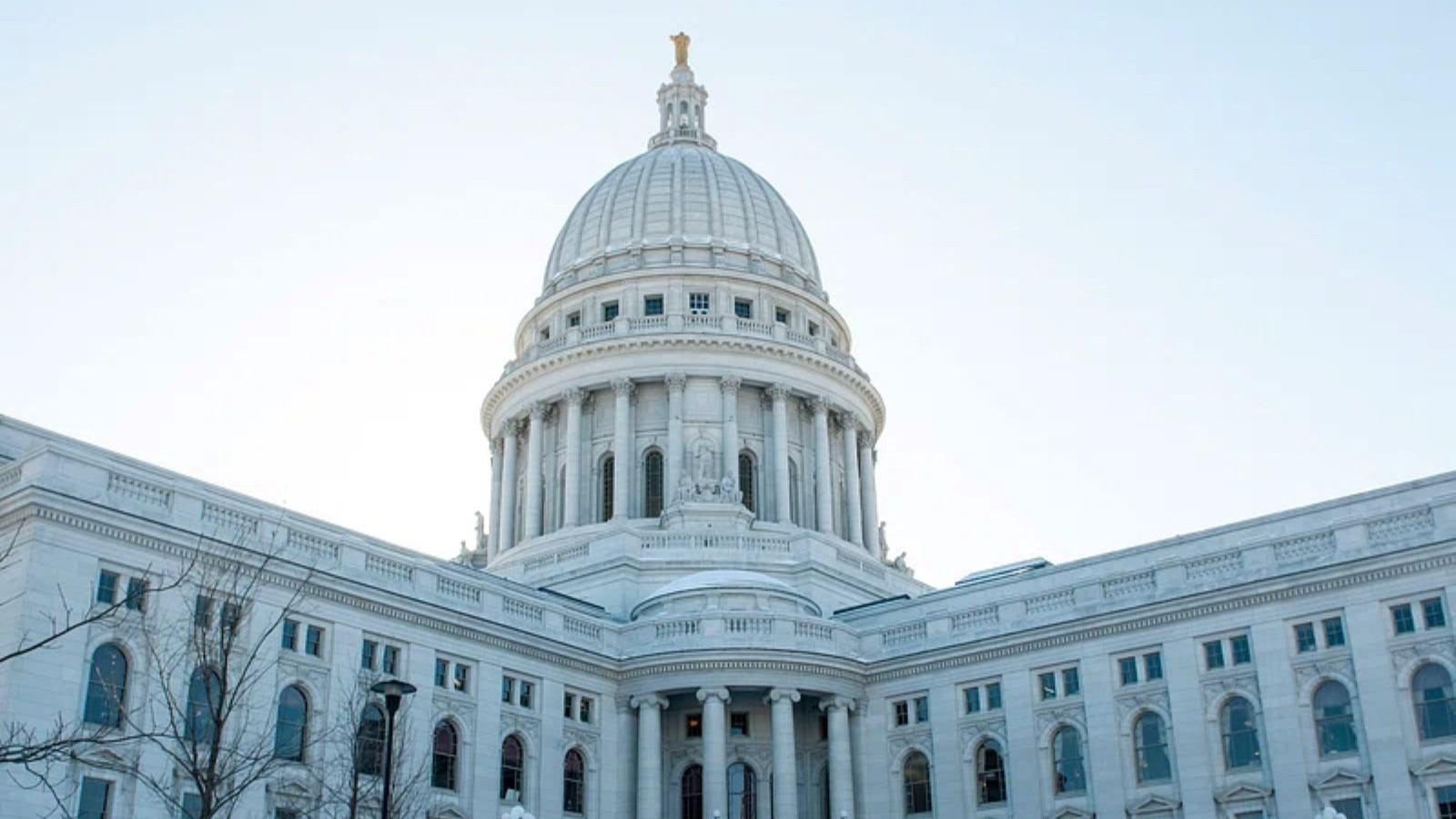
- Judge William Griesbach denied the CFTC’s request for a preliminary injunction against Wisconsin in a 28-page decision filed July 29.
- The court said the agency is unlikely to prove sports event contracts are swaps or that federal law preempts Wisconsin’s gambling statute.
- Two days earlier the same federal plaintiffs won an injunction against Minnesota, splitting the district courts.
- Wisconsin’s suits accuse Kalshi, Polymarket, Coinbase, Robinhood and Crypto.com of felony commercial gambling punishable by up to 3.5 years.
GREEN BAY, Wis. – A federal judge on Wednesday refused to block Wisconsin from enforcing its felony gambling law against Kalshi, Polymarket, Coinbase, Robinhood and Crypto.com, handing the Commodity Futures Trading Commission the first defeat in its campaign of suing states that move against prediction markets.

U.S. District Judge William Griesbach of the Eastern District of Wisconsin denied the CFTC’s motion for a preliminary injunction in a 28-page decision filed July 29, finding the agency unlikely to prevail on either half of its case: that sports event contracts are “swaps” under the Commodity Exchange Act, or that the act preempts Wisconsin’s gambling statutes even if they are.
Wisconsin Sued The Platforms, Then The CFTC Sued Wisconsin
Wisconsin filed civil enforcement actions in Dane County Circuit Court on April 23 against the five platforms, seeking declarations that their sports event contracts violate Wis. Stat. 945.03, the state’s commercial gambling law, along with injunctions barring the contracts from trading in the state.
The CFTC, joined by the United States as co-plaintiff, sued Wisconsin on April 28 to shut those actions down. “Our message to Wisconsin is the same as to New York, Arizona, and others: if you interfere with the operation of federal law in regulating financial markets, we will sue you,” Chairman Michael Selig said in the commission’s announcement of the suit.
Griesbach’s decision is the first ruling to reject that strategy, and it went against the agency on every preliminary-injunction factor: likelihood of success, irreparable harm and the balance of equities.
The stakes reach past one state because federal preemption is the core defense the platforms raise whenever a regulator treats event contracts as sports betting of the kind offered by online gambling sites for USA players. Wisconsin’s suits target the five largest names in a sector whose prediction markets now out-trade America’s sportsbooks.
Not Likely Swaps, Not Preempted
The court broke with the Third Circuit, which held that Kalshi’s sports contracts are swaps and that the federal act preempts New Jersey’s gambling laws. Griesbach wrote that the Third Circuit majority “offered no limiting principle” to its reading of the swap definition, citing the dissent’s warning that the logic taken to its extreme could lead to “a rationality-defying outcome.”
He instead called the analysis of district courts in Maryland, Nevada, Ohio, Michigan and New York that refused the platforms similar injunctions “especially helpful and persuasive.”
On preemption, the decision found no conflict between the two regimes and said the Third Circuit, in reaching the opposite conclusion, “did not identify any way in which compliance with state law would require a regulated party to violate federal law.”
A Felony Statute That ‘Seems To Cover’ The Contracts
The decision also examined what the platforms face in state court. Wisconsin’s statute makes it a Class I felony, punishable by a fine of up to $10,000 or imprisonment of up to three years and six months, to use a wire communication for gain to assist in placing bets on sporting events.
The sports event contracts traded on the five prediction markets “would seem to fall well within the scope of the statute,” Griesbach wrote, adding that if Wisconsin’s gambling laws did not cover the contracts, “the CFTC’s case against the State makes no sense” because there would be nothing to enjoin.
What Happens Next
The ruling deepened a divide the same week it emerged. On July 27, U.S. District Judge Katherine Menendez blocked Minnesota from enforcing its new prediction-market ban in a case brought by the same federal plaintiffs, finding the contracts likely are swaps and the state law likely preempted.
Griesbach also denied Wisconsin’s motions to dismiss and to transfer the case, so the CFTC’s suit continues toward a full merits decision, and he refused to let Kalshi, Crypto.com’s exchange arm or the American Gaming Association intervene as parties.
The court directed the clerk to set a telephone scheduling conference. Three of Wisconsin’s original enforcement actions, removed to the Western District of Wisconsin, await rulings on the state’s motions to send them back to Dane County.