
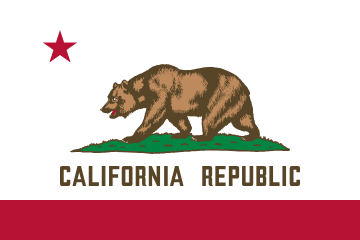
California Prediction Markets: The Tribal Sovereignty Fight, the Ninth Circuit and Where Residents Trade in 2026
No state in the country has a prediction-market story quite like California’s. Everywhere else the battle is a straight collision between federal derivatives law and a state gambling regulator. California has almost none of that. The state has not banned event contracts, has not sued Kalshi, and has not sent a single operator packing. Instead the pressure here comes from a source no other prediction-market case turns on: three federally recognized tribes wielding the Indian Gaming Regulatory Act, arguing that when Californians trade sports outcomes on Kalshi from tribal land, the platforms are running unauthorized Class III gaming on sovereign ground.
That fight is now sitting in front of the Ninth Circuit, and it does not rise or fall on the swaps-versus-gambling question that governs every other state. This page zeroes in on California — what the law actually says here today, why the tribal case is the one to watch, how residents trade, and what could upend all of it. Everything below is dated to August 2, 2026, because this area moves week to week.
More California Gambling Guides
This page covers prediction markets. Jump to the rest of our California coverage:
California Gambling Guide
The full legal picture and every option California players can reach in one place.
Open guide →California Online Casinos
Real-money online casinos and the legal picture for California players.
Open →California Online Sportsbooks
Legal and offshore sportsbooks, the latest odds, and how to bet in California.
Open →California Sweepstakes Casinos
Sweepstakes casinos and the legal picture for California players.
Open →California Online Poker
Legal and offshore poker rooms for California players.
Open →All 50 States
Compare gambling laws and the best sites in every US state.
Browse states →USA Prediction Markets
How CFTC-regulated event contracts work nationwide.
Browse →Yes — they are available to California residents right now, and no state law or court order blocks them as of August 2, 2026. CFTC-registered platforms including Kalshi, Polymarket, FanDuel Predicts and DraftKings Predictions accept California accounts, operating as federal event-contract exchanges rather than California-licensed sportsbooks. The honest status is layered: available today, no state prohibition, but with a live federal appeal — the tribes’ Ninth Circuit case — that could change the picture on tribal land and beyond.
Are Prediction Markets Legal in California?
Yes, they are available to California residents right now, and no state law or court order currently blocks them. That is the plain answer as of August 2, 2026. CFTC-registered platforms including Kalshi, Polymarket, FanDuel Predicts and DraftKings Predictions accept California accounts and list contracts here, operating as federal event-contract exchanges rather than as California-licensed sportsbooks. The state has not enacted a ban, its attorney general has issued no cease-and-desist, and no California court has ordered a shutdown.
The answer means separating two things that California headlines have jumbled together. The reason these platforms operate at all is a jurisdictional argument: the operators treat sports and other outcome contracts as event contracts or swaps under the Commodity Exchange Act (CEA), a federal statute that hands the CFTC authority over the venues that list them. On that theory, a state gaming board has no more say over a Kalshi contract than it does over a soybean future. California, unlike a dozen other states, has never tested that theory in court against these platforms. So the federal framework has gone unchallenged by the state, and residents can trade.
What California does have is the tribal case, and it is a genuine legal cloud rather than settled calm. Three tribes have an appeal pending at the Ninth Circuit that, if it lands their way, would carve out a California obstacle rooted not in state gambling law but in the Indian Gaming Regulatory Act. So the honest status is layered: available today, no state prohibition, but with a live federal appeal that could change the picture on tribal land and beyond. The sections that follow break down each piece — the tribal suit first, because it is the heart of the California story.
The Tribes Take on Kalshi: An Indian Gaming Theory No Other State Is Testing
Back in July 2025, three federally recognized tribes — the Blue Lake Rancheria, the Chicken Ranch Rancheria of Me-Wuk Indians and the Picayune Rancheria of the Chukchansi Indians — filed suit against Kalshi and Robinhood in the U.S. District Court for the Northern District of California. Their argument runs through the Indian Gaming Regulatory Act (IGRA), the 1988 federal law that governs how gaming works on tribal lands and that underpins the compacts California tribes signed with the state. The tribes contend that Kalshi’s sports event contracts, when a user trades them while physically standing on tribal land — including through the Robinhood app, which distributes Kalshi’s contracts — amount to unauthorized Class III gaming conducted on their sovereign territory without the authorization IGRA requires, in violation of their gaming ordinances. They layered a Lanham Act claim on top.
Why this is a different animal from every preemption case bears spelling out. In Nevada, New York, Ohio and the rest, the question is whether a state gambling statute survives contact with the CEA. The tribes are not invoking a state gambling statute. IGRA is federal law, compact exclusivity is a matter of federal Indian law and contract, and tribal sovereignty is its own constitutional tradition. Because those threads are independent of the swaps-versus-betting fight, a ruling that the CEA preempts California’s Penal Code would not dispose of the tribes’ IGRA theory.
“The platforms could win the national preemption war and still lose ground here.”
The tribes moved early for a preliminary injunction to pull the contracts off tribal land while the case proceeded. On November 10, 2025, U.S. District Judge Jacqueline Scott Corley denied that motion. She found the tribes had not shown a likelihood of success on the merits of either the IGRA or the Lanham Act claim, treating Kalshi as operating within the Commodity Exchange Act framework rather than under tribal gaming rules. The practical effect was that the platforms stayed live throughout California, tribal land included, and the tribes were left to appeal. The docket and order are reviewable through public court-record services such as CourtListener and Justia, which mirror Northern District of California filings.
Rather than accept the loss, the tribes took it up to the U.S. Court of Appeals for the Ninth Circuit. Two milestones there define where things stand. First, on May 6, 2026, the Ninth Circuit denied the tribes’ motion to have their appeal assigned to the same three-judge panel already hearing the consolidated Nevada prediction-market appeals. That denial deliberately splits the West Coast litigation onto separate tracks, keeping the tribal IGRA theory from being folded into the state preemption theory. The two questions will be answered by different panels, on their own reasoning.
Second, on July 10, 2026, the Ninth Circuit heard oral argument on the tribes’ appeal of Judge Corley’s denial. The tone in the courtroom cut against Kalshi. The three-judge panel signaled real skepticism toward the platforms, with one judge remarking that the contracts “sound like a bet” subject to Native American gaming law — a pointed observation given that the whole platform defense rests on these instruments being something other than bets. Attorney Lester Marston argued the appeal for the tribes. Reporting indicates that 27 states and the District of Columbia filed an amicus brief backing the tribes, a striking show of cross-jurisdictional support. The panel did not rule from the bench and set no timeline.
So where does that leave a California resident on August 2, 2026? The platforms remain available statewide, tribal land included, because no injunction is in force — Judge Corley’s denial still governs the status quo and the appeal has not produced a decision. But the argument went badly enough for the platforms that the outcome is genuinely uncertain. Worth noting on the industry side: FanDuel Predicts already excludes tribal lands from its sports contracts by design, a structural choice that sidesteps precisely this dispute and hints at how seriously the sector takes the IGRA angle.
A Dated Timeline of California’s Prediction-Market Fight
The Ninth Circuit Shadow Over the Whole West Coast
California does not sit in isolation from the national litigation, even though the state itself is not fighting the platforms. The Ninth Circuit — the same appellate court hearing the tribes’ appeal — is also weighing a separate, consolidated set of appeals out of Nevada that will decide the core preemption question for the entire circuit, California included. Those Nevada cases, argued April 16, 2026 before Judges Ryan D. Nelson, Bridget S. Bade and Kenneth K. Lee, ask whether sports event contracts are CFTC-regulated swaps or unlicensed sports betting. The district court below ruled they are not swaps, siding with Nevada, which is the opposite of what the Third Circuit concluded in April 2026 when it held for Kalshi against New Jersey in KalshiEX LLC v. Flaherty.
Here is why a Californian should care about a Nevada appeal. If the Ninth Circuit rules for Nevada, it sets binding preemption law across the circuit and cements a split with the Third Circuit, which makes Supreme Court review close to inevitable. A ruling for the platforms would, conversely, entrench the federal-jurisdiction argument that keeps California accounts open. Either way, the preemption outcome lands on California through circuit precedent — separate from, and in addition to, whatever the tribal panel decides on IGRA. Two Ninth Circuit rulings are therefore hanging over the state at once, answering two different questions, and both could reshape access here.
The federal regulator is on the platforms’ side
The CFTC under its current leadership dropped its appeal in the Kalshi election-contracts matter, withdrew a 2024 proposed rule that would have restricted event contracts, and has publicly warned it will sue state regulators who interfere with federally licensed operators. As of mid-2026 the agency had sued nine states over exactly that. California is not among them — the state has not moved against the platforms, leaving the CFTC no California enforcement action to challenge.
Newsom’s Ethics Order: Integrity, Not Access
California’s single direct state action on prediction markets targets the conduct of its own officials, not the availability of the platforms to residents. On March 27, 2026, Gov. Gavin Newsom issued an executive order barring gubernatorial appointees and state officials from using any nonpublic government information to profit — for themselves or for family, associates or former business partners — by trading on prediction markets, and it named platforms such as Kalshi and Polymarket. The full text is published through the Office of the Governor. Read it for what it is: a public-integrity rule for state employees, not a consumer restriction. A California resident who does not hold state office is entirely unaffected.
Newsom was not acting on a hypothetical. Insider-trading enforcement in this sector became concrete in 2026: federal prosecutors brought the first criminal prediction-market insider-trading case in April, charging an Army master sergeant over Polymarket trades tied to nonpublic government information on a military operation, and the CFTC followed with a case against a technology-company engineer over trades on nonpublic contract categories. Illinois Gov. J.B. Pritzker issued a parallel order on May 26, 2026 restricting state-employee trading. The pattern says that as prediction markets grow, the governments whose decisions move those markets are moving to keep their own people from front-running them.
Why AB 831 Is Not a Prediction-Market Ban
AB 831 — Online Sweepstakes Casinos
AB 831 targets online sweepstakes casinos — the dual-currency “coin” operators that run casino-style games under a sweepstakes wrapper. CFTC event-contract exchanges like Kalshi and Polymarket are a different legal species entirely: federally registered derivatives venues, not sweepstakes operators, and they fall outside AB 831’s scope.
One California statute keeps getting misread as a prediction-market crackdown, and clearing it up matters because the error is common. AB 831 targets online sweepstakes casinos — the dual-currency “coin” operators that run casino-style games under a sweepstakes wrapper. Its concern is that model and its promotional-credit mechanics. CFTC event-contract exchanges like Kalshi, Polymarket, FanDuel Predicts and DraftKings Predictions are federally registered derivatives venues, not sweepstakes operators, and they fall outside AB 831’s scope. If you see a headline treating a California sweepstakes-gaming story as a prediction-market ban, it is conflating two unrelated things. AB 831 is a sweeps ban; it does not reach event contracts.
The confusion is understandable because both stories involve California cracking down on online-gaming gray areas at the same moment. But the legal hooks could not be more different. A sweepstakes casino claims its coins are not real-money gambling; a prediction-market exchange claims its contracts are federally regulated derivatives. AB 831 speaks to the first claim and says nothing about the second. Nothing in that statute has removed a single prediction-market platform from California or created any obligation for one.
How a California Resident Actually Trades an Event Contract
Setting aside the courtroom drama, the mechanics of trading are worth understanding, because they differ meaningfully from placing a bet at a sportsbook. A prediction market lists a contract on a yes-or-no question — will a given team win, will an economic figure land above a threshold, will a named event happen by a date. Each contract settles at either one dollar (if the outcome is yes) or zero (if no). The current price sits somewhere between one cent and 99 cents and reads as the market’s implied probability: a contract trading at 62 cents means the crowd collectively prices the “yes” outcome at roughly 62 percent.
What a Californian is really doing is buying and selling those contracts against other traders, not wagering against a house that sets the line. On an order-book exchange, your order is matched with another participant willing to take the other side, the way a stock trade matches a buyer and a seller. You can enter a position and exit it before the event resolves — selling a contract that has risen in price to lock in a gain, or cutting a loss — which is not something a settled sportsbook ticket lets you do. When the underlying event finally resolves, contracts pay out at a dollar or expire worthless, and the exchange typically earns through trading or settlement fees rather than by baking a margin into the odds.
That structure — peer-to-peer matching, tradeable positions, probability-style pricing — is the crux of the operators’ legal argument that they are running a derivatives venue rather than a book. Whether that argument ultimately holds is the very thing the courts are chewing on. But for the resident sitting in front of the app, the practical experience is closer to trading a two-outcome security than to clicking a moneyline, and the tax and consumer-protection consequences follow from that difference.
What Californians Can Trade, Category by Category
The menu extends well past sports, and the breadth is part of why these platforms drew California interest in a state with no legal mobile sportsbook. Sports contracts are the volume driver industry-wide and the category at the center of the litigation. But the same accounts list a wide range of non-sports markets, and those tend to draw less legal fire because they look least like a sportsbook bet.
Sports
Outcomes across major leagues, with deeper types (spreads, totals, player and game props, parlays) on sports-native platforms. This is the litigated category a tribal or preemption ruling would hit first.
Politics & Elections
Contracts on election results, control of legislative chambers, and policy outcomes. Polymarket’s traditional strength and the category with the longest CFTC history.
Economics & Finance
Interest-rate decisions, inflation and jobs numbers, and other data-release outcomes — the contract type that most cleanly fits the “event contract” framing under the CEA.
Crypto & Markets
Price-threshold contracts on digital assets and market benchmarks.
Culture & Entertainment
Awards, box-office and pop-culture outcomes — lighter-weight markets that round out the menu.
A California-specific caveat sits underneath all of it: which categories a given platform lists changes frequently, and the sports category is the one most exposed to the tribal appeal and the broader preemption fight. A resident who trades only economic or political contracts is on the least contested ground; the sports contracts are the ones a court order would most plausibly target first. FanDuel Predicts, notably, only lists its sports contracts in states without a legal FanDuel sportsbook and excludes tribal land — so even within a single platform, the sports menu carries state-specific and land-specific limits the other categories do not.
Platforms California Residents Can Use Right Now
Several CFTC-registered or CFTC-distributed platforms accept California accounts as of August 2, 2026. Eligibility, market menus and category availability shift week to week, so confirm your own access on each operator’s site before depositing.
KalshiFederalStatus: CFTC-registered — central to the tribal appeal
Kalshi is the operator at the center of the tribal appeal — the named defendant, alongside Robinhood, in the IGRA suit now before the Ninth Circuit. As a CFTC-registered exchange it accepts California accounts and lists a broad slate of sports, political, economic and cultural contracts. Its sports wording is the single most litigated element in the sector nationally, and the July 10, 2026 oral argument went pointedly against it. For a Californian it remains fully available statewide, tribal land included, while the appeal is pending — but it is also the platform whose California access a tribal win would most directly threaten. Our dedicated Kalshi review breaks down the contracts and the litigation in depth.
FanDuel PredictsFederalStatus: CFTC event-contract exchange — excludes tribal land
FanDuel Predicts is the entrant designed almost as if California were its template. It launched December 22, 2025 in partnership with CME Group and expanded its sports contracts into California in mid-January 2026, among roughly 18 states. The design choices are what make it stand out here: it offers sports contracts only in states without a legal FanDuel sportsbook, which California qualifies for; it excludes tribal lands outright, sidestepping the exact dispute driving the Ninth Circuit appeal; and it is engineered to be pulled if California ever legalizes mobile sports betting. It is also the only platform in the group that ships deposit limits, deposit alerts, self-exclusion tools and problem-gambling support routed through Kindbridge Behavioral Health out of the box — a genuine consumer-protection edge.
DraftKings PredictionsFederalStatus: CFTC event-contract framework
DraftKings Predictions gives Californians a name they already know for trading a broad slate of outcomes. It launched December 19, 2025 across 38 states, running on a CFTC event-contract framework rather than state gaming licenses, and its market menu is wider than FanDuel’s. One thing to keep straight in California: DraftKings also operates a separate daily fantasy sports product that is legally distinct from the prediction exchange — do not conflate the event-contract platform with DFS, since they sit in different legal buckets. Our review breaks down the prediction product on its own terms.
PolymarketOffshoreStatus: Reentering the US via CFTC-regulated QCEX
Polymarket brings the widest range of non-sports markets — politics, economics and culture — alongside its sports contracts, which suits a California trader more interested in elections or macro data than in game lines. It confirmed its formal U.S. reentry on July 23, 2026, having acquired the CFTC-regulated QCEX exchange to run a domestic entity after years operating offshore and settling with the CFTC in 2022. Two cautions for a California reader: Polymarket sits under a broad CFTC integrity probe opened June 23, 2026, and it is not a defendant in the tribal suit — that case names Kalshi and Robinhood, not Polymarket — so the tribal appeal does not directly bind it the way it binds the two named operators.
The Rest of the Field Available in California
Beyond those four, other CFTC-registered or CFTC-distributed platforms that reach California residents include Robinhood — itself a co-defendant in the tribal case, distributing Kalshi’s contracts — along with Crypto.com, Fanatics Markets, Novig and ProphetX. Which contract categories each one lists differs by operator and changes often, so verify availability on the platform itself before funding an account.
| Operator | Status | California note | Visit | Review |
|---|---|---|---|---|
| Kalshi | Federal | Named defendant in the tribal appeal; available statewide | Visit | Read review |
| Polymarket | Offshore | Reentering via QCEX; not named in the tribal suit | Visit | Read review |
| FanDuel Predicts | Federal | Sports only in no-sportsbook states; excludes tribal land | Visit | Read review |
| DraftKings Predictions | Federal | Wider menu; distinct from its DFS product | Visit | Read review |
| Robinhood | Federal | Co-defendant in the tribal case; distributes Kalshi contracts | Visit | Read review |
| Crypto.com | Federal | CFTC-distributed event contracts | Visit | Read review |
| Fanatics Markets | Federal | CFTC-distributed; category menu varies | Visit | Read review |
| Novig | Federal | CFTC-registered peer-to-peer exchange | Visit | Read review |
| ProphetX | Federal | CFTC-registered exchange; verify current CA access | Visit | Read review |
For the full national roster, our prediction markets hub tracks every reviewed platform.
Prediction Markets Versus a California Sportsbook That Does Not Exist
The comparison a lot of Californians actually want — prediction markets against legal online sportsbooks — has a strange feature here: the sportsbook side of the ledger is empty. California has no legal online sportsbook. The 2022 ballot measures that would have authorized it, Propositions 26 and 27, both failed, and there is no licensed mobile sports betting in the state as of August 2, 2026. That vacuum is a large part of why prediction markets caught on with California residents at all — they are, for many, the only nationally available way to take a position on a game outcome from a phone in the state.
But treating a prediction market as a drop-in sportsbook replacement is a mistake, legally and practically. A licensed sportsbook, where it exists, is a state-regulated operator: the state sets the minimum age at 21, runs a self-exclusion registry, supervises dispute resolution, and taxes and audits the book. A prediction-market exchange is a federally regulated derivatives venue with none of those state guardrails — the minimum age is typically 18, there is no California self-exclusion program that reaches it, the odds structure is a probability-priced contract rather than a posted moneyline, and the tax treatment is unsettled in ways a sportsbook’s is not.
| Feature | Prediction market (federal) | Licensed sportsbook (where it exists) |
|---|---|---|
| Regulator | CFTC (federal derivatives) | State gaming authority |
| Minimum age | Typically 18 | 21 |
| Self-exclusion | None that reaches CFTC exchanges | State registry |
| Pricing | Probability-priced yes/no contract | Posted moneyline / odds |
| Tax treatment | Unsettled; no IRS classification | Established gambling-income rules |
| In California today | Available to residents | Does not exist |
For how sports wagering is regulated in places that have legalized it, and what would change if California ever joined them, see this state’s California sportsbooks page, the map of states with online sportsbooks and our main online sportsbooks hub. For the full California landscape — tribal casinos, cardrooms and the rest — start with California gambling sites and the broader state index. And for the national view, our overview of whether online gambling is legal puts California in context.
Taxes and the Consumer-Protection Gap
Two practical realities follow directly from these being federal exchanges rather than California-licensed operators, and both cut against the resident. Start with consumer protection. Because a CFTC event-contract exchange sits outside California’s gambling framework, none of the state’s gambling-consumer safeguards apply to it. There is no California self-exclusion registry that covers these platforms, no state complaint process to escalate a dispute, and no state-supervised resolution if something goes wrong. If you have self-excluded through a California tribal casino, that exclusion does not reach a CFTC exchange — the systems are entirely separate. And the minimum age is generally 18, not the 21 the state would impose on regulated mobile sports betting if any existed. The one meaningful exception is FanDuel Predicts, which voluntarily ships deposit limits, deposit alerts and self-exclusion and routes problem-gambling support through Kindbridge Behavioral Health.
Taxes here are genuinely unsettled — keep your own records
This is not tax advice, and a California resident with real money at stake should consult a professional. Kalshi does not provide a 1099-B for its event contracts, and the IRS has issued no formal classification guidance — leaving open whether a gain is ordinary gambling income, a capital gain, or a Section 1256 contract with its own blended rate. The answer may even differ by platform. California layers its own state income tax on top. Keep records, do not assume a platform will hand you a tidy tax form, and get advice before filing.
How California Stacks Up Against Neighboring and Comparable States
California’s hands-off posture looks even more distinctive next to what its neighbors and peer states are doing. Take Nevada, right across the border and the most aggressive state in the country on this issue: its Gaming Control Board sent Kalshi a cease-and-desist, a Carson City judge granted a state restraining order calling Kalshi’s sports wording indistinguishable from a licensed Nevada bet, and Kalshi alone faces contempt exposure there for allegedly failing to geofence out Nevada users after other platforms voluntarily withdrew. California has done none of that. A resident who can trade freely in Los Angeles would find the same platforms fighting a running battle in Las Vegas.
The contrast sharpens across the map. Arizona secured the first district-level merits ruling that federal law preempts state gambling statutes as applied to these markets — a permanent injunction entered May 5, 2026 — and its attorney general even attempted the only state criminal prosecution against Kalshi. New York took two tracks, with a federal judge denying Kalshi an injunction and the state attorney general filing a July 31, 2026 petition seeking to bar operations and claw back gains. Minnesota went furthest legislatively, passing an outright ban that a federal judge blocked on July 27, 2026 before it could take effect. Against all of that, California’s story is defined by a single non-state actor: the tribes. No other state’s central prediction-market fight is an Indian-gaming case.
That comparison also frames what a California resident should actually watch. In the enforcement states, the risk to access is a state regulator or a state court. In California, the risk is federal — the Ninth Circuit, on two separate tracks. It is a quieter posture day to day, but not necessarily a safer one, because a tribal win at the Ninth Circuit would carry weight beyond a single state courtroom.
What Could Change, and What to Watch
Several pending developments could move California’s status, and they are worth tracking in order of how directly they hit the state:
- The Ninth Circuit tribal ruling. The decision on the tribes’ appeal, argued July 10, 2026 and undecided as of August 2, is the single most California-specific item on the board. A ruling for the tribes would validate the IGRA theory and create an obstacle — especially on tribal land — that the platforms’ preemption wins do not answer.
- The Ninth Circuit Nevada preemption ruling. The consolidated Nevada appeal, argued April 16, 2026, will set circuit-wide preemption law that binds California. A ruling for Nevada creates a split with the Third Circuit and pushes the whole question toward the Supreme Court.
- Supreme Court review. New Jersey has until September 2026 to petition the Supreme Court after its Third Circuit loss, and a Ninth Circuit split would make a grant far likelier. A definitive federal ruling would settle the preemption question for every state, California included.
- The CFTC’s final event-contract rule. The agency proposed amendments in June 2026 that would review contracts category by category, permitting most sports event contracts while banning narrow categories such as those tied to individual player injuries or referee decisions. The final rule will shape which contracts survive nationwide.
- Federal legislation. A bill co-sponsored by Sens. John Curtis and Adam Schiff — the latter a Californian — would bar CFTC exchanges from listing sports-betting-style contracts. If it passed, it would moot the entire body of litigation, tribal case included.
- California itself. The state has stayed out of the fight so far. Watch for any move by the attorney general or the legislature; a California enforcement action would open a new front and likely draw a CFTC countersuit, given the agency’s stated posture.
Frequently Asked Questions About California Prediction Markets
Are prediction markets legal in California right now?
They are available. As of August 2, 2026, California has no law banning them and no state cease-and-desist or court order blocking them, and CFTC-registered platforms accept California accounts. The live legal cloud is the tribes’ Ninth Circuit appeal, argued July 10, 2026 and still undecided.
Who is actually suing over prediction markets in California?
Three tribes — the Blue Lake Rancheria, the Chicken Ranch Rancheria of Me-Wuk Indians and the Picayune Rancheria of the Chukchansi Indians — not the state. They sued Kalshi and Robinhood in July 2025 under the Indian Gaming Regulatory Act, and their appeal of a denied injunction is pending at the Ninth Circuit. The California attorney general has not sued the platforms.
Does AB 831 ban Kalshi or Polymarket in California?
No. AB 831 targets online sweepstakes casinos and their dual-currency coin models. CFTC event-contract exchanges like Kalshi and Polymarket are federally regulated derivatives venues and fall outside that statute entirely. Do not read an AB 831 headline as a prediction-market ban.
Can I trade on tribal land in California?
The platforms remain available statewide, tribal land included, while the tribes’ appeal is pending, because Judge Corley denied the injunction in November 2025 and no court has reversed that. That could change if the Ninth Circuit rules for the tribes. FanDuel Predicts already excludes tribal lands by its own design.
Why does the tribal case matter if Kalshi keeps beating states?
Because it runs on different law. The state cases turn on whether federal derivatives law preempts state gambling statutes. The tribal case turns on the Indian Gaming Regulatory Act, tribal sovereignty and compact exclusivity — federal Indian law, not state gambling law. A preemption win against a state does not resolve the IGRA theory, so the tribes could prevail even as the platforms win elsewhere.
What is the minimum age to trade in California?
Most CFTC exchanges, including Kalshi, set the minimum at 18. That is lower than the 21 California would require for regulated mobile sports betting — which the state does not currently offer at all.
Did Newsom ban prediction markets with his executive order?
No. Newsom’s March 27, 2026 executive order bars state appointees and officials from trading prediction markets on nonpublic government information. It is a public-integrity rule for state employees, not a restriction on the general public. An ordinary California resident is unaffected by it.
Is my money protected if a court forces a platform out of California?
There is no California guarantee. In states that have forced exits, operators have generally allowed users to close positions and withdraw funds, but no California-supervised process exists for CFTC exchanges. Trade only what you can afford to have tied up while the litigation plays out.
Are prediction markets the same as a California online sportsbook?
No, and California has no legal online sportsbook anyway. Prediction markets are federally regulated derivatives with probability-priced contracts, a minimum age of 18, unsettled tax treatment and no state consumer protections. A licensed sportsbook, where one exists, is a state-regulated operator with a 21 age floor, self-exclusion and state oversight. They are different products under different law.
Sources and What to Watch
Key primary and secondary references for California, all dated to August 2, 2026: the Northern District of California docket in the tribes’ suit against Kalshi and Robinhood, including Judge Jacqueline Scott Corley’s November 10, 2025 denial of the preliminary injunction, viewable through CourtListener and Justia; the tribes’ appeal at the U.S. Court of Appeals for the Ninth Circuit, argued July 10, 2026, with the May 6, 2026 order denying assignment to the Nevada panel; Gov. Newsom’s executive order of March 27, 2026, published by the Office of the Governor; and the federal regulatory posture of the CFTC, which registers the platforms and has asserted exclusive jurisdiction over the contracts. The single item to watch above all others is the Ninth Circuit’s ruling on the tribal appeal.
Accuracy note
This page is current to August 2, 2026, and prediction-market law changes weekly. Time-sensitive items to re-verify: the status of the Ninth Circuit tribal appeal (undecided at publication) and the consolidated Nevada preemption appeal; each platform’s current California availability and which contract categories it lists; the count of states reportedly joining the tribes’ amicus brief (reported as 27 states plus DC); and the unsettled federal and California tax treatment of prediction-market gains, on which the IRS has issued no formal guidance.
The Bottom Line for California Traders
California is the one state where the central prediction-market fight is not the state versus the platforms — it is three tribes wielding federal Indian gaming law against Kalshi and Robinhood at the Ninth Circuit. Residents can trade today on Kalshi, Polymarket, FanDuel Predicts, DraftKings Predictions and the rest of the CFTC field, statewide and tribal land included, because no injunction is in force. But two Ninth Circuit rulings hang over that access at once, the tax picture is unsettled, and the consumer protections a licensed sportsbook would carry simply are not here. Trade informed, keep your own records, and watch the tribal appeal above all else.