
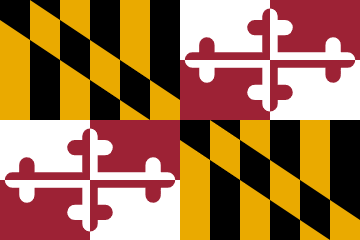
Prediction Markets in Maryland: The State That Said No to Kalshi
Most states fighting the prediction-market industry lost their first courtroom round. Maryland won its. When U.S. District Judge Adam B. Abelson refused to shield Kalshi from Maryland’s gambling regulators in the summer of 2025, he handed the state a federal ruling that its gaming laws could reach event contracts on the Orioles, the Ravens and every other game a resident might want to trade. That single order turned a mid-Atlantic state into one of the anchor cases in a national fight now barreling toward the U.S. Supreme Court.

Then the story got stranger. A local investigative team pulled the paperwork behind Maryland’s public opposition and found the regulator’s official letter to federal authorities was, in substance, the casino industry’s letter — copied almost verbatim from an American Gaming Association template. This page walks through both halves of that story: the litigation that put Maryland on the map and the transparency scandal that complicated the state’s moral high ground. For the wider picture, our guide to USA online gambling sites covers the licensed books, casinos and poker rooms that operate under state law.
More Maryland Gambling Guides
This page covers prediction markets. Jump to the rest of our Maryland coverage and the national prediction-markets hub:
Maryland Gambling Guide
The full legal picture and every option Maryland players can reach in one place.
Open guide →Maryland Online Casinos
Real-money online casinos and the legal picture for Maryland players.
Open →Maryland Online Sportsbooks
Legal and offshore sportsbooks, the latest odds, and how to bet in Maryland.
Open →Maryland Sweepstakes Casinos
Sweepstakes casinos and the legal picture for Maryland players.
Open →Maryland Online Poker
Legal and offshore poker rooms for Maryland players.
Open →All 50 States
Compare gambling laws and the best sites in every US state.
Browse states →USA Prediction Markets
How CFTC-regulated event contracts work nationwide.
Browse →Contested. They are available — a Maryland resident can open a Kalshi account and trade today — but only because the state agreed to pause enforcement while the appeal plays out, not because a court blessed the product. A federal trial judge sided with the state, and the Fourth Circuit has not yet ruled. Anyone trading now is trading in a negotiated truce that ends the day the panel decides.
Are Prediction Markets Legal in Maryland?
They are available, but their legality is unresolved and being fought over in a federal appeals court right now. As of August 2, 2026, a Maryland resident can open a Kalshi account and trade sports event contracts, because the state agreed to hold off on enforcement while the appeal plays out — not because a court has blessed the product. The underlying legal question, whether federal commodities law strips Maryland of the power to treat these contracts as gambling, was answered against the industry at the trial level and is now pending before the U.S. Court of Appeals for the Fourth Circuit.
To work out why the situation is this unstable, you have to separate three things that often get blurred together. First, there is the federal framework: platforms like Kalshi are registered with the Commodity Futures Trading Commission as designated contract markets, and they argue everything they list is a federally regulated financial product beyond any state’s reach. Second, there is Maryland law: the state built a licensed sports-betting market through the Maryland Lottery and Gaming Control Agency, and its regulators view unlicensed sports contracts as illegal betting dressed up as trading. Third, there is the courtroom scoreboard, which in Maryland has so far favored the state. Judge Abelson found that Kalshi had not shown Congress clearly meant to wipe out Maryland’s authority over gambling, and that a company could plausibly obey both federal and state rules at once. That reasoning is the opposite of what the Third Circuit later concluded for New Jersey, and it is why Maryland sits on the contested side of a genuine national split.
The honest bottom line: nobody trading in Maryland today is doing so under a court order that protects them. They are trading in a pause — a negotiated truce that ends the moment the Fourth Circuit rules or the state changes its mind. Everything below is meant to help you understand how durable that truce is likely to be.
Availability is not legality
The product stays live only because Maryland paused enforcement pending appeal. There is no court order protecting traders, and the day the Fourth Circuit rules is the day the truce is up for renegotiation. Confirm any platform’s current status on its own site before funding an account.
The Letter That Was Not Really Maryland’s Letter
Start with the piece of this saga that no other state can match, because it explains the machinery behind the entire anti-prediction-market push. In the spring of 2026, Spotlight on Maryland — a reporting partnership involving the Baltimore Sun, FOX45 News and WJLA — obtained internal records from the Maryland Lottery and Gaming Control Agency through a public-information request. Those records told an uncomfortable story about how the state’s official position was manufactured.
Back in April 2025, Maryland had sent a formal letter to the CFTC urging the agency to prohibit sports-related event contracts. On its face, that was exactly what you would expect a state gaming regulator to do. But the documents showed the American Gaming Association, the trade group representing commercial casinos, had supplied Maryland officials with a ready-made template letter making that same argument. Maryland’s version matched the AGA draft’s substance word for word, with only state-specific tweaks added. The association’s model opened by describing itself as the regulatory bodies charged with licensing and overseeing the legal gaming industry, expressing grave concerns about so-called sport event contracts. Maryland changed the plural bodies to the singular body and swapped in a Maryland reference, then sent it as the state’s own considered view. According to the reporting, the letter went out roughly eight days after the AGA handed over the draft.
The paper trail put a name on it. John Martin, director of the Maryland Lottery and Gaming Control Agency, wrote in an internal email dated April 22, 2025, that a possible action was a letter to be emailed to the CFTC commissioners, noting plainly that the letter had been provided by the American Gaming Association. The records reportedly also showed AGA materials circulating to Maryland officials that included draft CFTC letters and the commissioners’ email addresses — in other words, a full lobbying kit, not just talking points.
“Maryland is the state where the curtain slipped, and the industry-funded nature of the resistance became impossible to ignore.”
Maryland’s regulator pushed back on the framing. An agency spokesman said the office had independently evaluated the issue and reached its stance based on what serves the state’s best interests, and Martin has publicly cast the fight as a legitimate mix of legal, consumer-protection and fiscal concerns, once summarizing it as a legal matter and a consumer protection matter with a fiscal interest for the state attached. Both things can be true at once: the state may genuinely believe unlicensed sports contracts harm Maryland, and its public filing may still have been ghost-written by the casino lobby. The documents speak to the second point regardless of the first.
The industry seized on it hard. In December 2025, Kalshi, Crypto.com, Coinbase Global, Robinhood Markets and Underdog had formed the Coalition for Prediction Markets. In the summer of 2026, that coalition escalated, sending letters to roughly 20 state auditors and inspectors general — naming Maryland, Nevada, Utah, Minnesota and Illinois specifically — and accusing regulators of collusive behavior. The coalition argued that public records produced under Maryland’s disclosure law suggested the Lottery and Gaming agency may have been working in coordination with the AGA, other states and undisclosed entities to advance the private interests the association represents by keeping designated contract markets from offering event contracts. Whether that rises to anything actionable is a separate question, and no finding of wrongdoing has been made. But as a matter of public understanding, Maryland became the clearest window in the country into who is actually driving the campaign.
How Kalshi Lost the First Round in Federal Court
The legal fight ran on a parallel track to the lobbying story, and it is the reason Maryland matters to lawyers watching this space nationwide. After the Maryland Lottery and Gaming Control Commission moved against it, Kalshi sued in the U.S. District Court for the District of Maryland — the case captioned KalshiEX LLC v. Martin, naming director John Martin, docketed as No. 1:25-cv-01283-ABA. Kalshi asked the judge for a preliminary injunction: an order that would bar the state from enforcing its gambling laws against Kalshi’s sports contracts while the lawsuit proceeded. In most of the early state battles, judges granted that kind of relief. In Maryland, Judge Abelson did not.
Preliminary Injunction — Denied
Judge Adam B. Abelson refused to bar Maryland from enforcing its gambling laws against Kalshi’s sports contracts, finding Kalshi had not shown Congress clearly and manifestly intended for the Commodity Exchange Act to preempt Maryland’s authority over betting — and that a platform could comply with both federal and state regimes at once.
On August 1, 2025, Abelson denied the injunction. His reasoning is worth understanding because it became a template other skeptical judges would echo. He leaned on the long-standing presumption that federal law does not casually displace areas states have always governed, and gambling regulation sits close to the core of a state’s traditional police powers. Against that backdrop, Kalshi had to show that Congress clearly and manifestly intended to strip states of their authority over betting when it wrote the Commodity Exchange Act. Abelson found the company had not carried that burden. He acknowledged the federal statute has at least some preemptive force, but concluded Kalshi failed to demonstrate a likelihood of success on the claim that federal commodities law overrides Maryland’s gaming laws. Crucially, he also found a platform could comply with both regimes at once — meaning there was no irreconcilable conflict that would force federal law to win.
That last point is the hinge. Preemption arguments are strongest when obeying state law would make it impossible to follow federal law, or when Congress plainly meant to occupy the whole field. Abelson saw neither. To him, Maryland was not trying to regulate the federal derivatives market; it was trying to stop what it viewed as unlicensed sports betting from reaching its residents, and nothing in federal law clearly forbade that. Kalshi read the same statute as a wall around anything a CFTC exchange chooses to list. The judge did not buy the wall.
Kalshi moved immediately. Within days it appealed to the Fourth Circuit and asked for a stay of the ruling pending appeal. Rather than let the dispute turn into a geofencing standoff, Maryland agreed to pause enforcement of its position against Kalshi’s sports contracts until the appeal is decided. That agreement is why the product never actually went dark for Maryland residents, and why the practical answer to whether you can trade today is yes even though the legal answer is unsettled.
The Fourth Circuit Appeal and a Judge Who Called It Gambling
The appeal, KalshiEX LLC v. Martin, No. 25-1892 in the Fourth Circuit, is where Maryland’s story currently lives. A three-judge panel heard oral argument on May 7, 2026, and the tenor of that hearing gave the industry little comfort. Reports from the courtroom described a panel skeptical of Kalshi’s central claims — that its sports-linked designated contract markets are the exclusive business of federal regulators, and that Maryland overstepped by trying to keep those products away from its residents.
“What it does is basically gambling.” — Judge Roger Gregory, at oral argument
The most quoted moment came from Judge Roger Gregory, who cut through the financial-product framing with a blunt characterization, telling Kalshi’s side that what it does is basically gambling. That is the whole fight compressed into three words. Kalshi’s entire legal edifice depends on the idea that a yes-or-no contract on a football game is categorically different from a bet on that game because it trades on a federally regulated exchange. When an appellate judge responds that it looks like gambling to him, the exchange wrapper starts to feel thinner. Maryland reinforced the point on the eve of argument by filing recent decisions from other courts — including rulings out of the Sixth Circuit and federal courts in Ohio and Michigan — that had preliminarily rejected the same preemption theory, offering them as supplemental authority.
As recently as August 2, 2026, the Fourth Circuit has not issued its decision. That silence is consequential. A ruling for Maryland would give the state-authority side its first federal appellate win and deepen the divide with the Third Circuit, which in April 2026 held for the industry in the New Jersey case. A ruling for Kalshi would ease the pressure but would not erase the trial-court loss below. Either way, the Maryland appeal is one of a small handful of cases — alongside a pending Ninth Circuit appeal out of Nevada — that legal observers expect to shape whether and how fast the Supreme Court takes up the question. For Maryland traders, the near-term stakes are direct: the enforcement pause is tethered to this appeal, so the day the panel rules is the day the truce is up for renegotiation.
Timeline of Maryland’s Prediction-Market Fight
The Regulator Behind the Fight and the Cease-and-Desist Wave
Understanding Maryland requires understanding its regulator, because the whole conflict flows from a specific agency with a specific mandate. The Maryland Lottery and Gaming Control Agency, and its governing Maryland Lottery and Gaming Control Commission, oversee the state lottery, its six casinos, fantasy competitions and the licensed sports-betting industry that lawmakers authorized voters to approve in 2020. When Marylanders bet on a game through a licensed app, that agency is the body that vetted the operator, collected the license fee and takes the state’s cut of the revenue. That fiscal relationship is not incidental to the Kalshi dispute; it is part of why Martin openly framed the state’s interest as partly financial. Sports contracts that route around Maryland’s licensing regime also route around Maryland’s tax on sports wagering.
The enforcement action itself came on April 7, 2025, when the agency sent cease-and-desist letters to Kalshi, Robinhood and North American Derivatives Exchange — the Crypto.com-affiliated venue better known as Nadex — directing them to stop offering sports event contracts to Maryland residents. That order made Maryland the fifth state to take that step, part of a wave of cease-and-desist letters that swept across state gaming regulators in early 2025. Robinhood and Crypto.com’s distribution of these contracts made them natural targets alongside the exchange that actually lists most of them. Kalshi, characteristically, chose to fight rather than comply, which is what put the dispute in front of Judge Abelson in the first place.
The state’s legal posture has been reinforced from the attorney general’s office as well. Maryland’s attorney general joined a large multistate coalition — reported at more than 40 attorneys general — pressing the CFTC to recognize that states retain authority over sports-related prediction markets, rather than ceding the entire field to federal commodities regulators. That comment campaign, aimed at the CFTC’s rulemaking on event contracts, is the softer companion to the courtroom fight: even if the litigation is slow, the states want the federal agency itself to draw a line that leaves sports betting to them.
Where Maryland Fits in the National Map
Maryland is not an outlier acting alone; it is one node in a country-spanning legal war, and its particular value is that it landed on the losing side for the industry at the trial level. That makes it a natural counterweight to the states where Kalshi won early. The industry’s marquee victory came in the Third Circuit’s New Jersey decision in April 2026, a divided ruling holding that sports event contracts are federally regulated swaps and that federal law preempts state gambling laws as applied to them on a registered exchange. Tennessee produced an early injunction favoring the platforms. But the picture is genuinely split. Federal judges in Ohio, and courts in Michigan and Washington, moved against the platforms; Arizona went furthest, with a district judge converting a temporary order into a permanent injunction that treated federal law as preempting the state statute in that specific posture. Nevada became the most aggressive enforcement state, and New York’s attorney general filed a sweeping state-court action against Kalshi at the end of July 2026.
Set against that, Maryland’s contribution is a clean, well-reasoned trial-court rejection of the preemption theory — the kind of opinion the state-authority side cites when it wants to show that Kalshi’s argument is far from a sure thing. If the Fourth Circuit affirms Abelson, Maryland stops being merely a district-court data point and becomes appellate precedent squarely against the Third Circuit. That is the fact pattern that historically prompts the Supreme Court to step in. Our national overview of where online gambling stands legally puts this circuit-by-circuit chaos in context, and the broader prediction markets hub tracks the platforms and rulings as they move.
How Trading Actually Works for a Maryland Resident
If you have only ever used a Maryland sportsbook, the mechanics of a prediction market will feel familiar in some ways and alien in others. On a licensed app like FanDuel or BetMGM, you are betting against the house. The book sets the odds, the book pays winners out of its own margin, and the book profits when the numbers are shaded in its favor. A prediction market flips that structure. On an exchange like Kalshi, you are not betting against a bookmaker at all — you are buying and selling contracts against other traders. Every market is a yes-or-no question — will a given team win, will a number land above a threshold — and each contract expires at a dollar or at zero depending on the real-world outcome.
Prices behave like probabilities. A contract trading at 60 cents implies the crowd thinks there is roughly a 60 percent chance the answer turns out yes. You can buy the yes side or the no side, and you can often sell your position before the event resolves, taking a profit or cutting a loss the way you would trade a stock. Because the platform is matching buyers with sellers rather than booking bets, it earns fees on trading activity instead of a built-in vig. That order-book design is the technical heart of the industry’s legal argument — it is how they claim to be running a financial exchange rather than a sportsbook — even as judges like Roger Gregory look at the end result and see a wager on a ballgame. For a Maryland trader, the practical upshot is that pricing can be sharper than a sportsbook line on liquid markets, and that you are exposed to the crowd rather than to a house edge.
What You Can Trade, and Which Platforms Reach Maryland
What you can trade here is broader than sports, and that breadth is part of why the legal fight is so tangled. Maryland residents using an available exchange can typically trade contracts across several categories. The state enforcement wave, and Maryland’s cease-and-desist letters specifically, targeted the sports category — the one that most resembles the licensed betting the state already taxes. The non-sports contracts have drawn far less state attention, though they raise their own federal questions.
Sports outcomes
From championships down to single-game results — the exact category Maryland’s regulators consider illegal betting.
Economic indicators
Interest-rate decisions, inflation prints and other data-release markets.
Politics & policy
Elections, legislation and policy questions priced as yes-or-no contracts.
Culture & entertainment
Awards, box-office and pop-culture events that draw far less state scrutiny.
Crypto-linked markets
Contracts tied to digital-asset prices and milestones.
Availability in Maryland is a moving target, and it differs sharply by platform depending on each company’s appetite for legal risk. Because the state paused enforcement rather than winning an order forcing an exit, the venues that chose to keep operating have been able to. Check any platform’s own state availability page before funding an account, since operators change their footprints as rulings land.
The Platforms in Maryland’s Story
These are the operators the Maryland fight actually turns on — the exchange the state sued, the app that distributes its contracts, and the offshore giant returning to the US. Availability can change the day the Fourth Circuit rules.
KalshiStatus: Federal / CFTC-regulated — available under the enforcement pause
Kalshi is the central character in Maryland’s story and remains available to residents as of August 2, 2026. It is the CFTC-registered exchange that Maryland sued to stop, the one that refused to comply with the cease-and-desist, and the one whose appeal will decide how long the current arrangement lasts. No platform is more directly exposed to the outcome here. Its sports markets are the deepest in the sector, and they are exactly the contracts Maryland’s regulators consider illegal betting.
RobinhoodStatus: Federal / CFTC-linked — named in Maryland’s cease-and-desist
Robinhood matters in Maryland because it was named in the same April 2025 cease-and-desist letter as Kalshi. Robinhood does not build its own contracts; it distributes event contracts, including Kalshi’s, through Robinhood Derivatives to its large existing base of app users. For a Marylander who already trades stocks on Robinhood, prediction markets appear as an extension of an account they already have, which is precisely what made the state uneasy.
PolymarketStatus: Offshore / crypto-native — re-entering the US via a CFTC exchange
Polymarket approaches Maryland from a different direction. Long known as an offshore, crypto-native venue, it moved to re-enter the United States through a CFTC-regulated exchange it acquired, with its chief executive confirming a formal domestic return in July 2026. It was not on Maryland’s original cease-and-desist list, but as it builds out a compliant American product it steps directly into the same contested space.
Prediction-Market Operators and Maryland
Beyond the three headliners, a wider field of CFTC-linked venues and pick’em apps touches the Maryland market. One nuance worth flagging: FanDuel built its prediction product to offer sports contracts only in states its sportsbook has not yet reached — and Maryland has a licensed FanDuel sportsbook, so FanDuel’s sports event contracts are designed to stay out of the state.
| Operator | Type | Maryland notes | Links |
|---|---|---|---|
| Kalshi | Federal | The exchange Maryland sued; available under the enforcement pause. | Visit Read review |
| Robinhood | Federal | Named in the April 2025 cease-and-desist; distributes Kalshi’s contracts. | Visit Read review |
| Crypto.com | Federal | Its Nadex venue shared Maryland’s cease-and-desist letter. | Visit Read review |
| Coinbase | Federal | CFTC-linked venue in the broader market; Coalition member. | Visit Read review |
| DraftKings Predictions | Federal | Among the CFTC-linked venues in the broader prediction-market field. | Visit Read review |
| FanDuel | Federal | By design keeps sports contracts out of Maryland, where it runs a licensed sportsbook. | Read review |
| ProphetX | Federal | CFTC-linked exchange in the wider market. | Visit Read review |
| Novig | Federal | CFTC-linked exchange in the wider market. | Visit Read review |
| Underdog | Pick’em | Coalition for Prediction Markets member alongside Kalshi and Robinhood. | Visit Read review |
For the full roster of platforms and rulings across the country, the prediction markets hub tracks each operator as its footprint changes.
Prediction Markets Versus Maryland’s Licensed Sportsbooks
For a Maryland resident, the most practical way to understand a prediction market is to compare it with the sportsbook sitting right next to it on the phone screen — because the state treats them as fundamentally different things even when they look nearly identical. Maryland has a mature, legal online betting industry that launched in November 2022, and the differences are not academic.
| Factor | Licensed Maryland sportsbook | Prediction-market contract |
|---|---|---|
| Oversight | State license, state taxes, MD Lottery & Gaming Control Agency | Federal commodities rules; outside Maryland’s consumer-protection apparatus |
| Dispute escalation | State regulator to escalate to | No state complaint desk that reaches it |
| Self-exclusion | State self-exclusion registry | No Maryland registry that binds the platform |
| Minimum age | 21 | Generally 18 on CFTC exchanges |
| Pricing model | Fixed odds against the house, parlays and promos | Probability-priced contracts you trade in and out of |
The clearest gap is oversight. A licensed Maryland sportsbook operates under a state license, pays state taxes, and answers to the Maryland Lottery and Gaming Control Agency. If a dispute arises — a bet graded wrong, a withdrawal frozen, a self-exclusion request ignored — you have a state regulator to escalate to. A prediction-market contract sits under federal commodities rules instead. Age is another concrete divergence. A Maryland 18-year-old who cannot legally place a wager at a licensed sportsbook may be able to open a prediction-market account and trade a contract on the same game — a mismatch regulators and attorneys general have repeatedly cited. If you want to weigh the licensed route, our guide to Maryland sportsbooks lays out the legal apps, and the national roundups of states with online sportsbooks and the broader online sportsbooks hub show how Maryland compares.
Taxes and the Consumer-Protection Gap
Money won on a prediction market is taxable income, but the reporting is murkier than most Maryland bettors expect. Kalshi does not issue the 1099-B form that a typical brokerage sends for securities trades, and the IRS has not published formal guidance classifying event-contract gains — leaving open whether they are best treated as gambling winnings, ordinary income or something closer to a capital gain. That uncertainty is not a loophole; you still owe tax on your net gains, and Maryland assesses state income tax on top of federal. The practical difference from a licensed sportsbook is that the paperwork trail is thinner, which shifts more of the record-keeping burden onto you. None of this is tax advice, and anyone trading at volume should talk to a professional about how to report it.
The absence of a state safety net runs deeper than taxes. When you trade on a CFTC exchange from Maryland, you step outside the safety net the state built for its gambling market. There is no state-supervised dispute resolution, no Maryland problem-gambling exclusion list that binds the platform, and no state licensing review standing behind the operator. FanDuel’s prediction product is the sector’s notable exception, having voluntarily shipped deposit limits, self-exclusion tools and links to behavioral-health support — but that is a company choice, not a Maryland requirement, and it is also the product engineered to stay out of states like Maryland that already have a FanDuel sportsbook. For the venues that do operate here, the guardrails are whatever the platform decides to offer.
What happens to your money if the truce ends
If the Fourth Circuit rules against Kalshi and the enforcement pause ends, there is no guarantee written into Maryland’s arrangement about wind-downs. In other states, forced exits generally let users settle up and withdraw balances, but a trader carrying open positions when a ruling lands could face an abrupt wind-down. Trading in a legal truce means accepting the truce can end.
How Maryland Compares to Its Neighbors and What Could Change
Maryland’s regional neighbors sit all over the map, which makes the mid-Atlantic a useful microcosm of the national mess. Just across the line, New Jersey delivered the industry its biggest win when the Third Circuit held that federal law preempts state gambling rules for these contracts — the exact opposite of Abelson’s Maryland reasoning. That contrast, two neighboring states reaching opposite conclusions, is the split in miniature. Farther out, Ohio courts moved against the platforms, and the Sixth Circuit was among the authorities Maryland cited to the Fourth Circuit. Pennsylvania, Virginia and Delaware round out a region where licensed sports betting is well established, which tends to sharpen a state’s incentive to defend its licensed market against untaxed competitors.
For anyone watching Maryland specifically, a short list of triggers will decide what happens next. The Fourth Circuit ruling is the big one: an affirmance hands the state-authority camp appellate precedent and likely stiffens Maryland’s enforcement resolve, while a reversal would loosen the pressure on Kalshi. The pending Ninth Circuit case out of Nevada could create or confirm the circuit split that pushes the Supreme Court to act. The CFTC’s own rulemaking on which event contracts are permissible could reshape the board before any court finishes. And Congress looms over all of it; federal legislation aimed at barring exchanges from listing sports-betting-style contracts would moot the Maryland case entirely. Until one of those dominoes falls, Maryland residents are trading in the gap between a state that objects and a federal framework that has not yet been told, definitively, who wins. For the wider legal landscape by jurisdiction, see the full state-by-state index and Maryland’s own Maryland gambling sites guide.
Maryland Prediction Markets FAQ
Can I legally use Kalshi in Maryland right now?
You can access and trade on Kalshi in Maryland as of August 2, 2026, because the state agreed to pause enforcement while its case is on appeal. That is a practical availability, not a court ruling that the product is legal. A trial judge sided with the state, and the Fourth Circuit has not yet decided the appeal.
Did a Maryland judge really rule against Kalshi?
Yes. On August 1, 2025, U.S. District Judge Adam B. Abelson denied Kalshi’s request for a preliminary injunction in KalshiEX LLC v. Martin, No. 1:25-cv-01283-ABA, finding that Kalshi had not shown Congress clearly intended for federal commodities law to preempt Maryland’s gambling laws.
What is the AGA letter controversy about?
Public records reported by Spotlight on Maryland showed that Maryland’s April 2025 letter to the CFTC opposing sports event contracts closely matched a template supplied by the American Gaming Association, the casino trade group. An internal email from the agency’s director noted the letter had been provided by the AGA. Maryland says it independently evaluated the issue; the prediction-market industry has cited the records as evidence of coordination between regulators and the casino lobby.
Who regulates this in Maryland?
The Maryland Lottery and Gaming Control Agency, led by director John Martin, and its governing commission oversee the state’s lottery, casinos and licensed sports betting. That agency sent the cease-and-desist letters to Kalshi, Robinhood and Crypto.com’s Nadex in April 2025 and is the defendant in Kalshi’s federal suit.
Is this the same as betting at a Maryland sportsbook?
Legally, no. Licensed Maryland sportsbooks operate under a state license, pay state taxes and answer to the state regulator, with a 21-and-over age requirement and state consumer protections. Prediction-market contracts sit under federal commodities rules, generally allow trading at 18, and fall outside Maryland’s self-exclusion and complaint systems.
What happens to my funds if the court sides with Maryland?
There is no guaranteed answer. In other states that forced exits, platforms generally allowed users to close positions and withdraw balances, but Maryland’s enforcement pause does not lock in any specific wind-down terms. If the Fourth Circuit rules against Kalshi, an available product could be restricted quickly.
Can Maryland residents trade non-sports markets?
On platforms that are available, yes — contracts on economics, politics, culture and crypto are typically offered alongside sports. Maryland’s enforcement focused on sports event contracts, the category that most resembles the licensed betting the state already taxes.
Sources
Primary and reporting sources, accessed as of August 2, 2026:
- Maryland Lottery and Gaming Control Agency (regulator) — mdgaming.com
- Office of the Maryland Attorney General, statement urging the CFTC to recognize state authority over sports-related prediction markets — oag.maryland.gov
- U.S. District Court for the District of Maryland, KalshiEX LLC v. Martin, No. 1:25-cv-01283; Fourth Circuit appeal No. 25-1892 — docket via CourtListener
- U.S. Commodity Futures Trading Commission, event-contract rulemaking and public comments — cftc.gov
- Spotlight on Maryland (Baltimore Sun / FOX45 / WJLA), reporting that casino lobbyists drafted Maryland’s letter to federal regulators — foxbaltimore.com
- Casino.org, Coalition for Prediction Markets accuses AGA and states of collusive behavior — casino.org
- Law.com / National Law Journal, coverage of the May 7, 2026 Fourth Circuit oral argument — law.com
- Sports Betting Dime, Maryland enforcement efforts against Kalshi paused pending appeal — sportsbettingdime.com
Availability, court schedules and enforcement postures in this area change frequently. Confirm any platform’s current status on its own site and verify case developments on the court docket before acting.
The Bottom Line for Maryland Traders
Maryland is the state that said no to Kalshi at the trial level and then became the clearest window in the country into how the anti-prediction-market campaign was built. Residents can trade on Kalshi and Robinhood today, but only because the state paused enforcement while the Fourth Circuit weighs an appeal that could end the truce the day it rules. There is no court order protecting traders, no state consumer safety net, and no guarantee about what happens to open positions if the ruling goes Maryland’s way. Trade informed, confirm each platform’s current status on its own site, and never stake more than you can afford to lose.
Prediction Markets Hub
Every platform and ruling tracked nationwide, updated as the fight moves.
Open the hub →Maryland Gambling Guide
Every legal and offshore option in Maryland, in one overview.
Open the main guide →Kalshi Review
The exchange at the center of Maryland’s case, reviewed in full.
Read the review →