
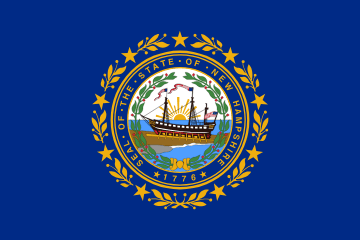
New Hampshire Sweepstakes Casinos: Legal Status, the DraftKings Monopoly and Where NH Players Stand
New Hampshire has a longer relationship with the word “sweepstakes” than almost any state in the country. When the Legislature launched the New Hampshire Sweepstakes in 1964, it became the first legal, modern, state-run lottery in the United States, and it did so by dressing the game up as a horse-racing sweepstakes to sidestep federal anti-lottery rules of the era. Six decades later the state still leans on that same creative streak. It runs the New Hampshire Lottery, it licenses a network of nonprofit “charitable casinos” packed with historical horse racing terminals, and it hands its entire online sportsbook to a single company. What it does not do is authorize a legal, real-money online casino, and that missing piece is exactly where dual-currency sweepstakes sites step in for residents who want slots and table games on a phone.

Sports wagering here runs through one operator only. DraftKings has held an exclusive statewide contract since the market opened in late December 2019, and in early 2026 the Lottery renewed that deal through 2028 with an option to stretch it to 2030. There is no FanDuel, no BetMGM, no Caesars app that a Granite State bettor can open legally. The state chose a monopoly on purpose, trading competition for a larger cut of the revenue. For anyone browsing the wider world of legal and gray-market play, that single-operator posture is one of the more unusual setups among all the USA gambling sites a resident can reach.
More New Hampshire Gambling Guides
This page covers sweepstakes casinos. Jump to the rest of our New Hampshire coverage:
New Hampshire Gambling Guide
The full legal picture and every option New Hampshire players can reach in one place.
Open guide →New Hampshire Online Casinos
Real-money online casinos and the legal picture for New Hampshire players.
Open →New Hampshire Online Sportsbooks
Legal and offshore sportsbooks, the latest odds, and how to bet in New Hampshire.
Open →New Hampshire Prediction Markets
Where prediction markets stand in New Hampshire and the sites that take residents.
Open →New Hampshire Online Lottery
Play the New Hampshire lottery online — games, tickets, and how it works.
Open →New Hampshire Online Poker
Legal and offshore poker rooms for New Hampshire players.
Open →All 50 States
Compare gambling laws and the best sites in every US state.
Browse states →Yes, in the sense that they are not prohibited — but that is not the same as licensed or regulated. No New Hampshire statute names sweepstakes or social casinos, no bill targets them, and the Lottery and Gaming Commission has issued no cease-and-desist orders. Residents 18 or older can register, play and cash out. The model survives on the absence of a law rather than the presence of one, which makes it a gray area that could close, not a settled right.
Are Sweepstakes Casinos Legal in New Hampshire?
Online casino gaming is the gap. Real-money slots and blackjack apps of the kind you find in New Jersey or Michigan simply are not licensed in New Hampshire, and a multi-year push to change that has stalled against fierce opposition from the state’s brick-and-mortar charitable gaming halls. Into that gap flow the sweepstakes casinos: dual-currency social platforms that let residents spin slots, deal cards and redeem prizes without any state license and without any purchase being strictly required. They are legal to use here, but they are not blessed, watched or backed by any New Hampshire regulator.
Yes, with the usual caveat that “legal” here means “not prohibited,” not “licensed and regulated.” No New Hampshire statute names sweepstakes or social casinos, no bill targeting them has been filed as of Aug. 3, 2026, and the New Hampshire Lottery and Gaming Commission has issued no cease-and-desist orders or public warnings against them. Residents who are 18 or older can register, play and cash out on the major platforms that accept the state, and the operators themselves point to federal and state promotional-contest law as their footing.
RSA 647:2 — The Criminal Gambling Statute
New Hampshire treats an activity as unlawful gambling only when all three classic elements line up: a prize, an element of chance, and consideration — something of value risked to enter. Sweepstakes operators build their entire structure around knocking out that third leg. You are never required to pay to obtain the currency that can be redeemed for cash, because a genuine free method of entry exists. Strip out consideration and the game falls outside RSA 647:2 and lands under ordinary sweepstakes promotion law — the same rules that let a fast-food chain run a “no purchase necessary” prize game.
The Lottery Commission’s silence is doing a lot of work here. That agency has clear statutory authority over the lottery, over the DraftKings sportsbook and over charitable gaming, and it aggressively polices its own Investigation and Compliance Division turf. Sweepstakes casinos sit deliberately outside those buckets. No New Hampshire official has formally declared them lawful, and no official has moved to shut them down either. That regulatory limbo is the whole story: the model survives on the absence of a law rather than the presence of one, which is precisely why it should be read as a gray area that could close, not a settled right.
“The model survives on the absence of a law rather than the presence of one.”
The Granite State Gambling Map: One Sportsbook, Many Charitable Halls, No Online Casino
To understand why sweepstakes sites matter so much here, you have to see the odd shape of what New Hampshire does allow. The full picture of licensed New Hampshire gambling sites and venues is narrow but distinctive, and every piece of it pushes casino-style online play toward the sweepstakes workaround.
The Lottery
The oldest layer, bankrolling public education since 1964. Sells draw games, scratch tickets and iLottery products online.
Sports Betting
Legalized through HB 480. A single exclusive license went to DraftKings, which pays the state 51% of mobile revenue.
Charitable Casinos
Privately run halls with table games and historical horse racing terminals, routing proceeds to local nonprofits.
Daily Fantasy & iLottery
DFS is explicitly authorized, and the Lottery sells draw and instant products through its own website and app.
Start with the lottery, the oldest layer. The New Hampshire Lottery has bankrolled public education since 1964 and today sells draw games, scratch tickets and iLottery products online. Layered on top is sports betting, legalized through HB 480 in 2019. Rather than open a competitive market, the Lottery ran a bid process, drew 13 proposals, and awarded a single exclusive license to DraftKings, which pays the state 51 percent of mobile revenue and 50 percent of retail. Governor Chris Sununu placed the ceremonial first wager as the market went live at the end of 2019. Four retail sportsbook windows and the DraftKings app are the entire legal sports-betting footprint, and the 2026 contract extension locked that monopoly in for years more.
Then there is the charitable gaming tier, the part outsiders rarely know about. New Hampshire licenses privately run “charitable casinos” that direct a slice of proceeds to local nonprofits. These halls offer table games, and since 2022 they have added historical horse racing machines, which look and feel like slots but technically resolve each spin against the outcome of a previously run, anonymized horse race through a pari-mutuel pool. Exacta Systems rolled the first HHR terminals into the state that year, and the format exploded. Venues such as The Nash in Nashua now generate eye-popping community returns; The Nash handed 12 nonprofits a record 2.4 million dollars in July 2026 alone from its games of chance, HHR terminals and video lottery machines. New physical charitable casinos are still being built and are slated to open through 2027.
Two smaller pieces round out the legal picture. Daily fantasy sports is explicitly authorized and regulated in New Hampshire, so residents can legally play DFS contests alongside the DraftKings sportsbook, and the Lottery sells iLottery draw and instant products through its own website and app. Both are state-sanctioned digital gambling of a sort, which makes the absence of a licensed online casino stand out even more starkly. The state has proven perfectly willing to put regulated gambling on a phone; it has simply drawn the line before slots and blackjack.
It is also worth separating the charitable casinos from the sweepstakes model in a player’s mind, because they are often confused. A charitable hall like The Nash is a licensed, physical, in-state venue regulated by the Lottery Commission’s Investigation and Compliance Division, where you wager real dollars on HHR terminals and table games and a cut goes to nonprofits. A sweepstakes casino is an unlicensed, out-of-state website running a promotional-coin structure with no New Hampshire oversight at all. They occupy completely different legal universes even though both let a Granite State resident play casino-style games.
What is conspicuously absent from that list is a licensed, real-money online casino. You cannot legally load a New Hampshire-regulated slots-and-blackjack app the way you load DraftKings for sports. That single hole in the map is the reason dual-currency sweepstakes casinos have a captive audience here: they are the only way, short of driving to a charitable hall or crossing a state line, for a resident to spin online slots or play virtual blackjack with a shot at redeeming a prize.
How the Dual-Currency Model Actually Works for a Granite State Player
Setting the hype aside, every sweepstakes casino runs on two separate currencies that never mix. The first is a play-money coin, branded differently at each site, that cannot be redeemed and exists purely so you can keep spinning for fun. The second is a promotional coin, the one that can eventually turn into a real prize. A resident in Concord who logs in for the first time gets a stack of both, free, just for creating an account.
Play-Money Coin
Branded differently at each site, cannot be redeemed, exists purely so you can keep spinning for fun.
Promotional Coin
The redeemable currency. Arrives free as a bonus, or via a no-purchase mail-in or online request — the load-bearing wall of the legal theory.
Here is the piece that keeps the model on the legal side of RSA 647:2. You are never actually purchasing the redeemable coins. When money changes hands, you are buying packages of the play-money currency, and the promotional coins land in your account as a free bonus, the same way a cereal box “gives” you a contest entry. Crucially, you can also request those promotional coins with zero spending through an alternative method of entry, usually a mailed postcard or an online request form. That no-purchase route is not a technicality that operators hide; it is the load-bearing wall of the whole legal theory, because it is what lets them argue no consideration was required.
Redemption is where a New Hampshire player finds out whether a site is worth the time. Once you accumulate enough of the promotional currency and clear the site’s playthrough and identity checks, you can convert it to cash prizes, typically via bank transfer, a gift-card catalog or a payment app. Every operator sets a minimum, often somewhere around 50 to 100 promotional coins before a first cash-out is allowed, and every operator requires identity verification before it releases money. The practical takeaway for a resident: read the redemption minimum and the ID rules before you sink hours into a platform, because a balance stuck below the threshold is a balance you cannot touch.
The Stalled Online Casino Fight and What It Means for Sweeps
New Hampshire has flirted with legalizing real-money online casinos more than once, and each attempt has died in roughly the same place. Senator Tim Lang and a handful of Republican colleagues have championed the effort through Senate Bill 168, a measure that would authorize a small, tightly capped market of licensed online operators, set the participation age at 18, route oversight to the Lottery Commission, and tax gross online gaming revenue at a steep rate with proceeds earmarked for education and property-tax relief funds.
Senate Bill 168 — Online Casino Legalization
Would authorize a small, tightly capped market of licensed online operators, set the age at 18, route oversight to the Lottery Commission, and tax gross online gaming revenue at a steep rate for education and property-tax relief. It cleared committee steps and drew favorable early votes, but the Senate laid it on the table in 2025 and it has stayed inactive into the 2026 session. As of Aug. 3, 2026, New Hampshire still has no legal real-money online casino.
Momentum has never been the problem. The bill has cleared committee steps and drawn favorable early votes. The wall it keeps hitting is the charitable gaming lobby. Those brick-and-mortar halls send tens of millions of dollars a year to New Hampshire nonprofits, and their operators have argued forcefully that a licensed online casino would siphon foot traffic and gut those donations. That opposition helped push the Senate to lay the bill on the table in 2025, effectively shelving it, and it has stayed inactive into the 2026 session. As of Aug. 3, 2026, New Hampshire still has no legal real-money online casino and no imminent one.
Why does a failed casino bill matter to a sweepstakes player? Because the two are linked in a tug of war. As long as the state refuses to license real online casinos, sweepstakes platforms face little organized pressure to leave, since they are not competing head-to-head with a regulated in-state product the way they do in New Jersey or Pennsylvania. If New Hampshire ever does pass SB 168 or a successor, expect the calculus to shift: a newly minted licensed market often comes bundled with language that squeezes out unlicensed sweepstakes competitors. For now, the legislative gridlock that frustrates casino advocates is quietly the thing keeping the sweepstakes door open.
Sweepstakes Sites That Accept New Hampshire Players
Availability is never static in this space, so each operator below was checked against its current state list as of early August 2026. All three accept Granite State registrations today. Because New Hampshire imposes no purchase, deposit or wagering tax of its own on these platforms, the coin math you see at signup is the coin math you actually get.
LoneStarStatus: Sweepstakes — unlicensed, accepts New Hampshire
Built by RealPlay Tech, the same Delaware-based team behind RealPrize, LoneStar brings a library north of 500 games to New Hampshire and keeps a fairly permissive state list, sitting out only a cluster of banned or regulated markets such as Michigan, Washington, Nevada and New Jersey. New Hampshire is squarely in the green column. First-time Granite State players are typically greeted with a large play-coin package plus a batch of the redeemable promotional currency, and the catalog leans heavily toward slots with a rotating set of table games. If you want the fuller rundown of coin packs, redemption speed and playthrough terms, our LoneStar review digs into the details. For a New Hampshire user, its appeal is breadth: a big enough game count that the free daily coin drips actually feel worth logging in for.
High 5Status: Sweepstakes — unlicensed, 21+ in New Hampshire
One of the longer-running names in the category, High 5 draws on the studio’s own decades of slot design, so the reels feel closer to a real casino floor than many rivals. New Hampshire is on its accepted list, though would-be players should note that High 5 sets its minimum age at 21 rather than the 18 that some other sweepstakes brands allow, so a 19- or 20-year-old resident who can legally play elsewhere will be turned away here. The site runs frequent coin promotions and a straightforward redemption path. Our High 5 review covers the age rule, the daily bonuses and the prize-conversion minimums in full. For a Granite State slots purist who is old enough, it is one of the stronger content libraries taking NH signups.
Casino ClickStatus: Sweepstakes — unlicensed, accepts New Hampshire
A newer arrival that began accepting United States players in early 2025, Casino Click keeps a notably short restricted-state list, excluding only Idaho, Michigan, Nevada, Kentucky and Washington, which leaves New Hampshire wide open. It runs the familiar two-coin structure, with free play-money coins and separately earned promotional coins, and requires no purchase to get started. As a younger platform its game count and redemption track record are still maturing, so it earns a place on a New Hampshire player’s list as a lighter, try-it option rather than a primary home. The full picture of its bonuses and cash-out process is in our Casino Click review.
A representative slice, not the whole field
These three are not the entire field. Plenty of other well-known sweepstakes brands accept New Hampshire, and you can browse the wider set through our sweepstakes casinos hub. Whichever you pick, the state offers you no recourse if something goes wrong, so the vetting is on you.
The Three Sites That Take New Hampshire, at a Glance
| Site | Best For | Min Age | NH Status | Review |
|---|---|---|---|---|
| LoneStar | Breadth — 500+ games | 18 | Accepted | Read review |
| High 5 | Studio-grade slots | 21 | Accepted | Read review |
| Casino Click | Newer, try-it option | 18 | Accepted | Read review |
For the full national field of brands and deeper reviews, our sweepstakes casinos hub tracks every operator we cover and which states each one accepts.
Sweepstakes Casinos Versus a Regulated Online Casino in New Hampshire
The simplest way to read what you are getting is to compare it to what you are not getting. In a state with a licensed online casino market, an operator answers to a gaming regulator that vets its ownership, tests its games for fairness, audits its payouts, enforces deposit and self-exclusion tools, and gives players a government complaint channel. New Hampshire offers none of that for casino-style play, because it has never licensed such a market. Anyone weighing the two should read our overview of online casinos in New Hampshire, which lays out exactly why no legal, state-regulated real-money option exists here today.
A sweepstakes casino, by contrast, is accountable to its own terms of service and to whatever consumer-protection interest a state attorney general chooses to take. There is no New Hampshire testing lab certifying the return-to-player on a sweeps slot, no state-run self-exclusion registry that covers these sites, and no regulator you can call if a redemption is denied. The trade is real: you get casino-style entertainment and a genuine, if modest, shot at prizes without leaving your couch, but you give up the safety net that a regulated market provides. That is not a reason to avoid the model, but it is a reason to treat every dollar you convert into play-money coins as spent, not invested.
Slots, Blackjack and How the Games Stack Up
The everyday reason people open these sites is the same reason they would open a regulated casino app: the games. Sweepstakes libraries are dominated by slots, and the better platforms license titles from the same studios that supply regulated markets, so a New Hampshire player will recognize familiar reel mechanics, bonus rounds and jackpot structures. If you want to understand how sweeps slots compare to the real-money product the state does not offer, our guide to online slots breaks down volatility, RTP and bonus features in plain terms.
Table games are thinner but present. Most quality sweepstakes casinos carry several blackjack variants alongside roulette, baccarat and casual poker formats, played with the promotional currency for a shot at redemption. The strategy does not change just because you are wagering coins instead of dollars, and a player who knows basic strategy will stretch a coin balance much further. For the fundamentals that carry over directly from regulated play, our blackjack section is a useful primer before you sit down at a sweeps table. The core skill set is identical; only the currency and the legal wrapper differ.
Taxes: New Hampshire’s Unusual Advantage
Granite State residents enjoy a genuine perk that players in most states do not, and it comes down to the state’s tax structure. New Hampshire levies no tax on wages, salaries, capital gains or gambling winnings, and it finished phasing out its last vestige of a personal income tax, the interest and dividends tax, effective Jan. 1, 2025. That means a New Hampshire resident who redeems prizes from a sweepstakes casino owes no state income tax on that money, full stop.
Federal obligations are another matter and they do not disappear. The Internal Revenue Service treats sweepstakes redemptions as taxable income regardless of where you live. When a prize crosses the reporting thresholds, an operator may issue you a tax form, commonly a 1099 for larger cumulative redemptions, and the largest single prizes can carry federal withholding. Even when no form is generated, the legal responsibility to report the income sits with you. This is not tax advice, and a resident with a big year of prizes should ask a professional, but the headline is genuinely favorable: New Hampshire is one of the friendlier states in the country to redeem in, because the state itself takes nothing.
State takes nothing, but the IRS still does
No New Hampshire income tax means no state cut on your redemptions. Federal tax still applies as ordinary income, larger prizes may generate a 1099 or carry withholding, and reporting is your responsibility even when no form is issued.
The Consumer-Protection Gap and Protecting Your Balance
Nothing about the sweepstakes model is watched by a New Hampshire agency, and that gap is not abstract. If an operator freezes your account, denies a redemption, changes its terms overnight or simply shuts down its state operation, there is no Granite State regulator with jurisdiction to force a resolution. Your only levers are the site’s own support channel, a payment-processor dispute, or a complaint to the attorney general’s consumer-protection unit, none of which is a guaranteed fix.
The bluntest version of this risk is what happens when a brand exits a state, something residents across the country have watched play out repeatedly during the 2025 and 2026 ban wave. When an operator pulls out of a market, players who cashed out ahead of the closure were generally made whole, but players sitting on a balance beneath the redemption cutoff frequently lost it, and most operator terms carry a forfeiture clause that lets the company zero out unredeemed coins at closure. The defensive playbook is simple and worth following on every New Hampshire site you join: complete identity verification early so your payout is not held back, learn the redemption minimum before you start playing, and redeem promotional coins as you earn them rather than letting a balance pile up. Treat accumulation as the enemy; a redeemed prize is safe, a stockpiled coin balance is exposed.
Redeem early, redeem often
Verify your identity up front, learn the redemption minimum before you play, and cash out promotional coins as you earn them. A redeemed prize is safe; a stockpiled coin balance is exposed to a forfeiture clause if the brand ever leaves New Hampshire.
How New Hampshire Compares to Its Neighbors
New England has become a patchwork on this issue, and New Hampshire currently sits on the permissive end of it. That is not guaranteed to last, so the neighborhood is worth watching.
| State | Sweepstakes Status | Why |
|---|---|---|
| New Hampshire | Available — gray area | No specific statute; no regulated online casino to defend |
| Maine | Prohibited | 2026 law treats redeemable currency as indirect consideration |
| Connecticut | Hostile / enforced against | Regulated igaming state protecting its licensed market |
| Massachusetts | Available, under a cloud | Ban proposal advanced then died before session ended |
| Vermont | Available — no statute | Much like New Hampshire, no specific law on the books |
| Rhode Island | Restricted | Regulated igaming state that restricts many platforms outright |
Maine moved into the prohibited column in 2026, with a law that treats the redeemable sweepstakes currency as a form of indirect consideration and effectively pushes operators out. Connecticut, a regulated online casino state, has long been hostile to the model and enforces against it to protect its licensed market. Massachusetts saw a ban proposal advance and then die before the session ended, leaving the model available but under a cloud, and Vermont has no specific statute much like New Hampshire. Rhode Island, another regulated igaming state, restricts many of these platforms outright.
The pattern across the region is instructive. States that already run their own licensed online casinos, like Connecticut and Rhode Island, tend to squeeze sweepstakes sites out to defend that revenue, while states without a regulated online casino, like New Hampshire and Vermont, have left the gray area alone. That is why the stalled SB 168 debate is the single most important variable for a New Hampshire sweepstakes player to track. The day the state finally licenses real online casinos is the day the sweepstakes model here is most likely to come under pressure. For the broader national context of which states allow what, our national guide to where each state’s online gambling stance nationwide is the place to start, and the full state-by-state directory lives in our states index.
Questions New Hampshire Players Ask About Sweeps Casinos
Do I have to live in New Hampshire to play?
No. You do not need to be a resident, but you do need to be physically located inside New Hampshire, or another state where the operator accepts players, at the moment you log in. Sites confirm your location with geolocation technology, so a New Hampshire address on file will not help if you are sitting in a prohibited state.
What age do I need to be?
Most sweepstakes casinos that accept New Hampshire set the minimum at 18, but the age is set by each operator, not the state. High 5, for example, requires players to be 21. Always confirm the specific site’s age rule before registering.
Can I really win cash without spending anything?
Yes, in principle. The no-purchase method of entry, usually the mail-in route or an online entry, lets you obtain the redeemable promotional currency for free, and those free coins are eligible for redemption just like purchased-bonus coins. It is slower than buying play-money packages, but it is a genuine route and it is central to why the model is legal here.
Will the New Hampshire Lottery Commission protect me if something goes wrong?
No. The Lottery and Gaming Commission regulates the lottery, the DraftKings sportsbook and charitable gaming, but it has no authority over sweepstakes casinos. If a dispute arises, your options are the operator’s support team, a payment dispute or the state attorney general’s consumer-protection division, not the Lottery Commission.
Could sweepstakes casinos be banned in New Hampshire?
It is conceivable but not on the table right now. No bill targeting sweepstakes casinos has been filed as of Aug. 3, 2026. The likeliest trigger for change would be the state finally licensing real-money online casinos, which historically comes with language that pushes unlicensed sweepstakes operators out. That effort has stalled repeatedly against charitable gaming opposition.
Do I owe taxes on my redemptions?
You owe no New Hampshire state income tax, because the state has none as of 2025. Federal tax still applies to sweepstakes redemptions as taxable income, and larger prizes may generate a 1099 or carry withholding. Reporting is your responsibility even when no 1099 is issued. This is a starting point, not tax advice.
Sources
- New Hampshire Lottery and Gaming Commission, Investigation and Compliance Division, Historic Horse Racing overview, compliance.lottery.nh.gov (accessed Aug. 3, 2026).
- RSA 647:2, New Hampshire criminal gambling statute (prize, chance, consideration test).
- New Hampshire HB 480 (2019), sports betting enabling legislation, and DraftKings exclusive Lottery contract; SBC Americas and CDC Gaming coverage of the 2026 contract extension through 2028.
- SBC Americas and PlayUSA reporting on Senate Bill 168 and the online casino legalization effort, including charitable gaming opposition (2025-2026).
- NH Department of Revenue Administration, “Repeal of NH Interest and Dividends Tax Now in Effect,” effective Jan. 1, 2025.
- Nashua Ink Link and Patch coverage of The Nash charitable gaming contributions, July 2026.
- PR Newswire, “Exacta Systems to Launch Historical Horse Racing Gaming in New Hampshire” (2022).
- Operator state-availability pages for LoneStar, High 5 and Casino Click (checked early August 2026).
The Bottom Line for New Hampshire Players
New Hampshire hands its whole online sportsbook to DraftKings, licenses charitable halls full of historical horse racing terminals, and has never authorized a real-money online casino. That single gap is why dual-currency sweepstakes sites have a captive audience here: they are legal to use, they ask no purchase, and the state takes no tax on what you redeem. The trade is the absence of a safety net, so verify early, learn the redemption minimum, and cash out as you go. The three sites reviewed above take Granite State signups today, and the stalled SB 168 debate is the one variable worth watching.