
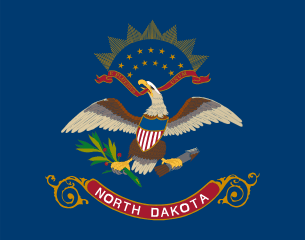
North Dakota Sweepstakes Casinos
Few states lean on charitable gambling the way North Dakota does. Residents of a state with barely 800,000 people pour more than $2 billion a year into electronic pull-tabs alone, the blinking bar-top machines that now throw off close to 90 percent of all charitable gross proceeds statewide. Roughly 5,100 e-tab units hum away in some 833 licensed sites run by hundreds of nonprofits, and the tax they generate has become a line item the Legislature counts on. Stack the five tribal nations and their casino floors on top of that, and North Dakota looks like a heavily gambled state. Yet none of it reaches a phone. There is no commercial online casino here, no state-licensed internet slots app, and no legal statewide online gambling of any kind. That online blank space is where dual-currency sweepstakes casinos have quietly moved in.

Because gambling sites for USA players come in wildly different legal shapes from one state to the next, North Dakota is worth pinning down precisely. This is not a state that banned sweeps, and it is not a state that welcomed them either. It is a charitable-gaming state whose whole gambling economy was built around local nonprofits and tribal compacts, and whose Legislature meets only every other year, leaving the newer online products to run on a legal theory nobody in Bismarck has yet tested in court.
More North Dakota Gambling Guides
This page covers sweepstakes casinos. Jump to the rest of our North Dakota coverage:
North Dakota Gambling Guide
The full legal picture and every option North Dakota players can reach in one place.
Open guide →North Dakota Online Casinos
Real-money online casinos and the legal picture for North Dakota players.
Open →North Dakota Online Sportsbooks
Legal and offshore sportsbooks, the latest odds, and how to bet in North Dakota.
Open →North Dakota Prediction Markets
Where prediction markets stand in North Dakota and the sites that take residents.
Open →North Dakota Online Poker
Legal and offshore poker rooms for North Dakota players.
Open →All 50 States
Compare gambling laws and the best sites in every US state.
Browse states →USA Sweepstakes Casinos
The best sweeps casinos and how the dual-currency model works.
Browse →They run here, and no North Dakota statute names or bans the dual-currency model — but call it unregulated and legally untested rather than blessed. No law authorizes sweeps casinos, none outlaws them by name, and neither a state court nor the attorney general has ruled on whether wagering redeemable Sweeps Coins crosses into illegal gambling. Operators treat that silence as room to run; a resident should treat it as a question that simply has not been answered.
The pages ahead lay out exactly where sweepstakes play sits for a North Dakotan as of Aug. 3, 2026: the criminal statute and sweepstakes law the operators build on, the charitable e-tab machine that dominates gambling here, the tribal backdrop, which reviewed brands genuinely take North Dakota sign-ups today, how the two-coin system actually works, the tax and consumer-protection tradeoffs, and why the state’s odd-year legislative calendar makes a sudden ban unlikely before 2027.
Are Sweepstakes Casinos Legal in North Dakota?
Yes, they run here, and no North Dakota statute names or bans the dual-currency model — but call it unregulated and legally untested rather than blessed. North Dakota has passed no law that authorizes sweepstakes casinos and none that outlaws them by name, and neither a state court nor the attorney general has ruled on whether wagering redeemable Sweeps Coins crosses into illegal gambling. Operators treat that silence, plus the state’s ordinary sweepstakes-promotion law, as room to run. A resident should treat it as a question that simply has not been answered.
Everything hinges on how the criminal code frames the offense. North Dakota Century Code section 12.1-28-01 defines gambling as “risking any money, credit, deposit, or other thing of value for gain, contingent, wholly or partially, upon lot, chance,” or the outcome of an event outside the risk-taker’s control. Section 12.1-28-02 then prohibits unauthorized gambling, with penalties that climb from a simple infraction for small stakes up to a Class A misdemeanor when the amount wagered runs higher, and felony exposure for those who run a gambling business. Courts read the familiar three elements into that language — consideration, chance and prize — and removing any single element takes an activity outside the definition. Sweepstakes operators aim the entire structure at consideration.
The consideration argument
Century Code 12.1-28-01 and 12.1-28-02 define and prohibit unauthorized gambling on the three-part test of consideration, chance and prize. Operators route their model through the state’s promotional-contest law in Chapter 53-11 instead, arguing that a genuine free entry route removes the consideration element and pulls the promotion out of the gambling ban.
Their argument runs through the state’s promotional-contest law rather than its gaming code. When you fund an account, the pitch goes, you are buying non-redeemable Gold Coins for entertainment; the redeemable promotional currency arrives free as a bonus, and you can also request it at no cost by mail or an online form. Because a genuine free route exists and no payment is required to play for prizes, operators claim there is no consideration, which pulls the promotion under North Dakota’s sweepstakes and prize-notice rules in Century Code chapter 53-11 instead of the gambling ban. Skeptics reply that a for-profit casino spinning slots around the clock, funded overwhelmingly by coin-package sales, looks nothing like the promotional giveaway that framework was written for. No North Dakota judge has weighed those two readings against each other, and that unresolved gap is the whole story.
What this means for a resident right now
Logging into a sweeps casino from Fargo or Minot is not going to put an ordinary player in legal jeopardy. Every state that moved against the model went after operators, payment processors and partners, not individual users, and North Dakota has taken no action against sweeps players at all. The thing a North Dakotan gives up by playing is protection, not liberty: no state agency here audits these sites for fair odds, holds their deposits, or answers the phone when a redemption stalls. You are relying on a private company’s terms of service — and buried in those terms, a mandatory arbitration clause. Play with that trade fully in view.
Charitable E-Tabs: The Machine That Swallowed North Dakota Gambling
To understand why online sweeps found an opening, start with the form of gambling North Dakota actually built its policy around. For decades the state’s legal gambling was small-stakes charitable gaming — bingo, raffles, pull-tabs, blackjack and paper games run by nonprofits, with the proceeds meant to flow back to community causes. Then came the electronic pull-tab. Legalized for statewide use in 2017, the e-tab took a paper game and put it on a fast, slot-style screen, and the money exploded. Handle that once measured in the hundreds of millions now runs past $2 billion a year across roughly 5,100 machines. Electronic pull-tabs alone account for close to 90 percent of charitable gross proceeds, dwarfing every other authorized game.
Tax policy followed the boom. House Bill 1212 restructured the e-tab levy to a tiered gaming tax — roughly 1 percent of adjusted gross proceeds on a nonprofit’s first $50,000 and 12 percent above that — a structure designed to capture more revenue as sites grow. For the 2025-2027 biennium the state has projected on the order of $52 million in gaming tax revenue, a figure that would have looked fanciful a decade ago. A University of North Dakota economic-impact study led by professor Cullen Goenner tallied hundreds of millions in adjusted gross proceeds, thousands of jobs and tens of millions in state tax from charitable gaming, and the numbers have only grown since.
House Bill 1212 — Tiered E-Tab Tax
Restructured the electronic pull-tab levy into a tiered gaming tax: about 1 percent of adjusted gross proceeds on a nonprofit’s first $50,000 and 12 percent above that. The structure captures more revenue as charitable sites grow, and it underwrites the roughly $52 million the state projects for the 2025-2027 biennium.
That scale explains a political reflex that matters for every online product, sweeps included. Charitable gaming is not a fringe pastime in North Dakota; it funds fire departments, youth sports, veterans’ groups and local nonprofits, and it hands the state real revenue. Lawmakers protect it. When online sports betting came up for a vote, the loudest objection was not morality but cannibalization — the fear that a slick mobile product would siphon dollars away from the bar-top e-tab that keeps the charitable model funded. Any future move on online sweeps will be read through the same lens: does it help or hurt the charitable machine.
The other half of that story is oversight strain. Attorney General Drew Wrigley’s Gaming Division audits charitable organizations, inspects equipment and investigates complaints, and in 2026 it has been busy — revoking the Beulah Convention and Visitors Bureau’s gaming license in March over misspent proceeds and pursuing other enforcement actions against organizations that broke the rules. The division rolled out a new online licensing system in April 2026 and moved gaming tax returns fully online as of July 1, 2026. Wrigley’s office has said plainly that enforcement resources have not kept pace with a billion-dollar industry. Notice where that attention sits: on the charitable e-tab economy the state actually licenses, not on the offshore-facing sweeps apps it does not.
The Tribal Casino Layer Sweeps Sites Sit Beside
North Dakota’s other pillar of legal gambling is tribal, and it is substantial. Five federally recognized nations — the Turtle Mountain Band of Chippewa Indians, the Mandan, Hidatsa and Arikara (MHA) Nation, the Standing Rock Sioux Tribe, the Spirit Lake Tribe and the Sisseton-Wahpeton Oyate — run more than a dozen gaming operations across the state under tribal-state compacts administered through the attorney general’s office. Sky Dancer in Belcourt, 4 Bears near New Town, Prairie Knights at Fort Yates, Spirit Lake Casino at St. Michael and Dakota Magic in Hankinson anchor the list, and a new property, Son of Star Casino, is slated to open in 2026, pushing the count higher.
Sky Dancer
In Belcourt, run by the Turtle Mountain Band of Chippewa Indians.
4 Bears
Near New Town, operated by the Mandan, Hidatsa and Arikara (MHA) Nation.
Prairie Knights
At Fort Yates, run by the Standing Rock Sioux Tribe.
Spirit Lake Casino
At St. Michael, operated by the Spirit Lake Tribe.
Dakota Magic
In Hankinson, run by the Sisseton-Wahpeton Oyate.
Son of Star Casino
A new property slated to open in 2026, pushing the state’s tribal count higher.
Gov. Doug Burgum signed a fresh 10-year gaming compact with the tribal nations in 2022, a deal that among other things authorized retail sports betting at tribal casinos and runs into the early 2030s. That is the ceiling of legal sports wagering in North Dakota: you can place a bet in person on a tribal floor, but there is no state-licensed online sportsbook and no mobile app tied to those casinos. The compacts govern brick-and-mortar tribal gaming; they say nothing about a resident opening a sweeps casino on a laptop in an apartment off tribal land. Sweeps operators occupy the space the compacts and the charitable statutes both leave untouched — the open online field.
How the Two-Coin System Plays for a North Dakotan
Stripped of the marketing, a sweepstakes casino hands you two separate currencies, and keeping them straight is the whole point. One is a play-money coin — Funzpoints calls its version Standard, other brands use names like Gold Coins — that you can buy, win and wager purely for fun. It never converts to cash, and if you only ever touch that currency you are playing a free social game, not gambling. The second is the promotional coin, branded as Sweeps Coins, Funzpoints Premium, Stake Cash or similar, and that one is the reason players show up: accumulate enough of it and you can request a redemption for cash or prizes.
Here is the mechanic that supposedly keeps the whole thing legal in North Dakota. You never buy the redeemable coin directly. You purchase a package of the play-money currency, and the promotional coins come free alongside the purchase — or you skip the purchase entirely and claim promotional coins through the no-purchase route every legitimate operator must offer, typically mailing in or filling out a web form. That free path is the load-bearing beam of the no-consideration theory: because a North Dakotan can obtain the redeemable currency without spending a cent, operators argue no one is compelled to pay to compete for prizes. Redemptions carry minimums, usually starting somewhere around the low tens of dollars in redeemable coin, and you must clear identity verification before any prize is paid.
“If you only ever touch the play-money currency you are playing a free social game, not gambling.”
Compared with a real-money app, the practical difference for a resident is what stands behind the coins. Fire up a licensed online slot in a regulated state and a gaming commission has vetted the return-to-player math and holds the operator to funded-account rules. Spin the same-looking reels on a North Dakota sweeps site and the only backstop is the company’s own promise. If you want a sense of how those game libraries stack up against licensed play, our overviews of online slots and blackjack lay out what the regulated versions actually offer.
Reviewed Sweeps Brands That Take North Dakota Players
North Dakota sits outside the restricted-state lists that many operators maintain, so the menu here is wider than in hostile states such as West Virginia or the outright-banned tier. Verified against current availability for Aug. 3, 2026, the three brands below all accept North Dakota registrations, and each brings a different flavor of the model. Availability can shift without much notice, so confirm a site still serves North Dakota at sign-up before funding anything.
FunzpointsStatus: Sweeps — not North Dakota-regulated
Simplicity is the pitch at Funzpoints, and it fits a market like North Dakota where plenty of players are coming from bar-top e-tabs rather than slick casino apps. Run by Woopla, Funzpoints uses a two-tier system — a Standard free mode and a Premium promotional mode whose points can be redeemed for cash — and leans on a slot-heavy, easy-to-navigate library rather than a sprawling table-game floor. New North Dakota players are routed through a no-purchase entry option and can claim a free welcome allotment of Premium points without buying anything, which makes it a low-friction place to see how redemption actually works before deciding whether to buy a coin package. Modest redemption minimums and a straightforward interface are the draw; the tradeoff is a narrower game catalog than the biggest brands.
Stake.usStatus: Sweeps — not North Dakota-regulated
Depth and volatility define Stake.us, the social arm of the Stake brand, and North Dakota is one of the states where it operates — notable given how long its restricted list runs elsewhere. Stake.us carries one of the heaviest exclusion lists in the business, having blocked players in states from Washington and New York to Michigan, Nevada and beyond at various points, so the fact that a North Dakotan can register at all is worth flagging. Its dual currency pairs non-redeemable Gold Coins with redeemable Stake Cash, and the catalog is built for players who want original high-volatility titles, crash-style games and a large slot lineup. It skews toward experienced players comfortable with swingy sessions rather than newcomers, and because Stake.us polices physical location strictly, a North Dakota account only works while you are actually inside the state.
SpreeStatus: Sweeps — not North Dakota-regulated
A mobile-first, sweeps-only feel sets Spree apart, and it accepts North Dakota players as of this writing. Spree runs the standard two-coin structure — a play currency for fun and a redeemable promotional coin — with a clean app-style interface and regular daily bonus drops that keep a free-play balance topped up through the no-purchase route. It positions itself as an approachable everyday option rather than a high-roller destination, which suits casual North Dakota players who want to sample redemption without committing to large coin buys. As with every brand here, read the forfeiture language in its terms before you let a balance sit, because Spree, like the rest, is a private operator with no North Dakota regulator standing behind it.
The Three Brands at a Glance
| Brand | Best For | Currencies | Status | Visit |
|---|---|---|---|---|
| Funzpoints | Simplicity and low-friction start | Standard / Premium | Sweeps — unregulated | Visit Read review |
| Stake.us | Depth and high volatility | Gold Coins / Stake Cash | Sweeps — unregulated | Visit Read review |
| Spree | Mobile-first everyday play | Play coin / promo coin | Sweeps — unregulated | Visit Read review |
For the model in general and the full brand lineup beyond North Dakota, our sweepstakes casinos hub covers how dual-currency play works and which operators lead the category nationwide.
Sweeps Versus a Real Online Casino in North Dakota
A useful way to frame a sweeps site is by what it is not. A regulated online casino — the kind that operates in states such as New Jersey, Michigan or Pennsylvania — holds a license from a state gaming authority, submits its games to independent testing, follows funded-account and anti-money-laundering rules, and answers to a regulator that can fine or pull it. North Dakota offers none of that online. The state authorizes charitable e-tabs, tribal casino gaming and a lottery, but it has never legalized a commercial internet casino, and repeated efforts to expand online wagering have stalled. A resident who wants to know what a licensed online casino market would even look like here can see the current state of play on our guide to online casinos in North Dakota.
Sweepstakes casinos slot into that vacuum precisely because they decline to call themselves casinos. They are unlicensed by design, running on a sweepstakes theory rather than a gaming permit, which means the consumer protections a regulated site must provide are optional here and largely absent. That is the core distinction to carry into any session: regulated real-money play trades convenience for oversight, while North Dakota sweeps play trades oversight for the only online option the state currently allows. For the wider national picture of which online products are legal where, our guide to whether the online gambling legal map in each state puts North Dakota in context, and the full sweepstakes casinos hub covers the model in general.
The core tradeoff
Regulated real-money play trades convenience for oversight. North Dakota sweeps play trades oversight for the only online option the state currently allows — the fairness assurances come from the operator’s own certification, not a North Dakota audit.
Taxes When a North Dakotan Redeems
A redeemed Sweeps Coin is income, and the free-to-play framing does not change that. The IRS treats prizes and winnings as taxable regardless of the marketing wrapper, so cash a North Dakotan pulls from a sweeps redemption is reportable on a federal return whether or not any form arrives. Operators commonly issue a 1099-MISC once annual redemptions to a player reach the $600 threshold, and larger prizes can carry federal withholding, but the reporting duty rests on the player even when no document shows up.
State tax is comparatively gentle here. North Dakota overhauled its individual income tax in recent years into one of the lowest-rate structures in the country, with a zero bracket for lower earners and a top marginal rate of just a few percent, so the state bite on a redemption is small relative to what a resident of a high-tax state would owe. Keep your own record of what you buy in coin packages and what you redeem, because the taxable figure is the winnings, and treat this as general information rather than tax advice — a North Dakota accountant is the right call for anything sizable.
The Protection Gap and the Risk of a Vanishing Balance
What a North Dakota sweeps player forgoes becomes concrete the moment something goes wrong. There is no state gaming regulator to complain to, no North Dakota self-exclusion program covering these sites, and no state-run dispute process if a redemption is denied. The recent ban wave in other states also exposed a quieter danger — what happens to your balance when a brand pulls out of a state. As operators exited places like California and Tennessee, players who withdrew before the shutdown usually got paid, but those holding balances below the redemption minimum often lost them, because operator terms routinely include a forfeiture clause for unredeemed promotional currency when an account or a market closes.
Defensive habits worth building early
An unregulated market means the operator’s terms are the only rules that apply. A few habits blunt the risk before a brand ever leaves North Dakota.
- Redeem, don’t hoard. An accumulated promotional balance is exactly what disappears if a brand leaves North Dakota on short notice.
- Learn the redemption minimum first. Know a site’s threshold before you play so you avoid being stuck under the line.
- Finish identity verification early. Clear it while nothing is on the line so a withdrawal is not held up later.
- Read the forfeiture and arbitration clauses. In an unregulated market those documents are the only rules that apply.
Why 2026 Stayed Quiet and What 2027 Could Bring
North Dakota’s legislative calendar is the single most important fact for anyone gauging how fast the rules could change. The Legislative Assembly meets in regular session only in odd-numbered years, which means there was no 2026 session at all — so despite what some out-of-state guides imply, no sweepstakes bill “failed” in North Dakota in 2026 because there was no venue to file one. The last full session, in 2025, spent its gambling energy on sports betting, and even that went nowhere: the House rejected House Concurrent Resolution 3002, a proposed constitutional amendment that would have let voters authorize regulated sports wagering, on a lopsided 70-24 vote. A recurring worry in that debate, voiced by Rep. Lawrence Klemin and others, was that new online gambling would drain money from the charitable e-tab operations the state relies on.
That posture tells you two things about sweeps. First, no legalizing push is underway — North Dakota is not moving to license and tax online sweeps casinos. Second, the same protect-the-charities instinct that sank sports betting cuts against a friendly online market of any kind, which is why the model survives on legislative silence rather than approval. The next chance for lawmakers to touch the subject comes in the 2027 regular session; a constitutional route to any expansion would then need voter ratification, plausibly not before the 2028 general election. Nothing on the calendar suggests a sweeps ban is imminent, but nothing suggests formal blessing either.
The bigger risk lives outside North Dakota. The 2025-2026 wave that swept sweepstakes casinos out of state after state — 14 states now prohibit the model — shows how quickly a legal gray area can slam shut. California’s Assembly Bill 831, signed by Gov. Gavin Newsom on Oct. 11, 2025, and effective Jan. 1, 2026, went furthest, extending criminal exposure beyond operators to payment processors, geolocation providers, game suppliers and even media affiliates, and it pushed most brands out of the country’s largest sweeps market. Louisiana’s ban took effect Aug. 1, 2026, Oklahoma’s is set for Nov. 1, 2026, and Indiana, Maine, Montana and Tennessee all moved in 2026. North Dakota has done none of this, but supplier withdrawals and multistate operator retreats can thin the game menus available to North Dakotans even without a single word changing in state law.
California AB 831 — The Model for the Ban Wave
Signed Oct. 11, 2025 and effective Jan. 1, 2026, it extended criminal exposure beyond operators to payment processors, geolocation providers, game suppliers and even media affiliates, pushing most brands out of the largest U.S. sweeps market. North Dakota has passed nothing like it, but supplier retreats triggered elsewhere can still thin ND game menus.
How North Dakota Stacks Up Against Its Neighbors
Regionally, North Dakota sits in relatively permissive company, which matters because sweeps availability often moves in blocs. South Dakota to the south and Wyoming remain open to the model on the same untested no-consideration theory, and Minnesota to the east is available but watchful — the attorney general there ordered operators to cease in late 2025 and a ban bill surfaced before dying in the 2026 session. Montana to the west, by contrast, is now firmly in the prohibited column after its 2025 felony-framework ban, a reminder that a bordering state can flip. For a North Dakotan the upshot is that the model is currently available across most of the Upper Plains, but the region is not uniform and the trend line elsewhere is toward restriction.
South Dakota
Open to the model on the same untested no-consideration theory.
Wyoming
Also remains open, part of the permissive Upper Plains bloc.
Minnesota
Available but watchful; AG ordered operators to cease in late 2025 and a ban bill died in 2026.
Montana
Firmly prohibited after its 2025 felony-framework ban — a bordering state that flipped.
For the land-based and licensed side of the ledger — the charitable games, the tribal casinos and the lottery that North Dakota actually authorizes — our main North Dakota gambling sites guide goes deeper, and you can compare the state against every other jurisdiction through the full state-by-state index.
Sweepstakes Casinos in North Dakota: Common Questions
Is it legal to play sweepstakes casinos in North Dakota?
Playing is not prohibited by any North Dakota statute, and no resident has faced enforcement for it. The sites operate in an unregulated gray area under the state’s sweepstakes-promotion law rather than a gaming license, and no North Dakota court has ruled on whether the model is lawful, so “not banned” is more accurate than “expressly legal.”
Do I have to buy anything to win real prizes?
No. Every legitimate operator serving North Dakota must offer a no-purchase route to obtain redeemable promotional coins, usually a mailed request or an online form. Buying coin packages is optional, and the free path is the mechanism operators rely on to argue there is no consideration under North Dakota law.
Can I bet on sports through a sweeps site in North Dakota?
Legal sports betting in North Dakota exists only in person at tribal casinos under the 2022 compacts; there is no state-licensed online sportsbook. Some sweeps platforms offer sportsbook-style products under the same dual-currency theory, but those sit in the same untested gray area as sweeps slots, not under any North Dakota sports-wagering authorization.
Will North Dakota ban sweepstakes casinos?
There is no ban bill pending, and because the Legislature meets only in odd years, the earliest realistic opportunity to consider one is the 2027 session. The state’s strong instinct to protect its charitable-gaming revenue could push in either direction, and the national ban wave shows how fast the picture can change, so treat continued availability as likely but not guaranteed.
Do I owe taxes on what I redeem?
Yes. A cash-out is taxable income federally, operators may issue a 1099-MISC at $600 in annual redemptions, and North Dakota’s low individual income tax applies on top. Keep your own records and consult a tax professional for anything substantial; this page is general information, not tax advice.
Sources and Further Reading
- North Dakota Century Code sections 12.1-28-01 and 12.1-28-02 (gambling definition and prohibition) and chapter 53-11 (sweepstakes and prize promotions).
- North Dakota Attorney General, Gaming Division — charitable gaming licensing, electronic pull-tab rules and 2026 enforcement actions (Beulah CVB license revocation, March 2026; new online licensing system, April 2026).
- KX News and Bismarck Tribune reporting on North Dakota’s roughly $2 billion charitable e-tab economy and House Bill 1212 tax changes.
- Prairie Public and CDC Gaming coverage of the North Dakota House’s 70-24 rejection of HCR 3002 (January 2025) and the state’s biennial 2027 session outlook.
- Tribal-state gaming compacts (2022, Gov. Doug Burgum) covering the five tribal nations and their casino operations.
- GamblingSitesUSA.com brand reviews for Funzpoints, Stake.us and Spree, verified for North Dakota availability as of Aug. 3, 2026.
Status confirmed as of Aug. 3, 2026
Sweepstakes-casino availability and state law change quickly; verify any brand’s current North Dakota status before playing. Explore the full sweepstakes casinos hub or return to the North Dakota gambling guide for the licensed side of the market.
All Sweepstakes Casinos
Compare every dual-currency brand we review, with deeper write-ups and the model explained.
Browse the hub →North Dakota Gambling Guide
Charitable e-tabs, tribal casinos and the lottery the state actually authorizes, in one overview.
Open the main guide →State-by-State Index
See how North Dakota compares to every other jurisdiction we track.
Browse all states →