
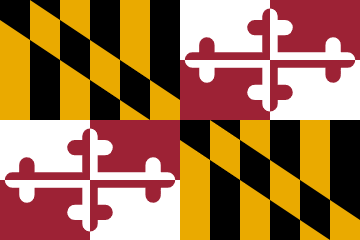
Maryland Poker Sites
Maryland has legal sports betting, six commercial casinos and four live poker rooms, but it does not have a regulated online poker market. Lawmakers have tried and failed four years running to authorize internet gaming, most recently in the 2026 session, and the state constitution means any expansion has to go to voters before it can take effect. That leaves Maryland players with three practical options: drive to a card room, use a sweepstakes poker platform, or play at an offshore site licensed outside the United States. This page covers all three in detail, including which offshore rooms actually accept Maryland residents and which ones block the state outright. For coverage of other states and site reviews across the market, see GamblingSitesUSA.com.

More Maryland Gambling Guides
This page covers online poker. Jump to the rest of our Maryland coverage:
Maryland Gambling Guide
The full legal picture and every option Maryland players can reach in one place.
Open guide →Maryland Online Casinos
Real-money online casinos and the legal picture for Maryland players.
Open →Maryland Online Sportsbooks
Legal and offshore sportsbooks, the latest odds, and how to bet in Maryland.
Open →Maryland Prediction Markets
Where prediction markets stand in Maryland and the sites that take residents.
Open →Maryland Sweepstakes Casinos
Sweepstakes casinos and the legal picture for Maryland players.
Open →All 50 States
Compare gambling laws and the best sites in every US state.
Browse states →Regulated online poker is not available in Maryland. No state licensing framework exists, iGaming bills failed in 2024, 2025 and 2026, and any expansion must be approved by voters at a general election before it can take effect. Players are left with offshore rooms, sweepstakes platforms, or the four live card rooms in the state.
Maryland Online Poker at a Glance
| Item | Status in Maryland |
|---|---|
| State-regulated online poker | Not available. No licensing framework exists. |
| State-regulated online casino | Not available. Bills failed in 2024, 2025 and 2026. |
| Offshore poker sites | Unregulated. Some accept Maryland players, some do not. |
| Sweepstakes poker | Operating in a gray area. A ban was proposed in 2026 and failed. |
| Live poker rooms | Four, at Live!, MGM National Harbor, Horseshoe Baltimore and Hollywood Perryville. |
| Home poker games | Legal since Oct. 1, 2016, with strict conditions. |
| Sports betting | Legal. Retail since December 2021, mobile since November 2022. |
| Regulator | Maryland Lottery and Gaming Control Agency, or MLGCA. |
| Minimum age | 21 for casino poker and sports betting. 18 for lottery and most charitable gaming. |
| State tax withholding on winnings | 8.75% for residents, 7% for nonresidents, on qualifying wins above $5,000. |
Poker Sites That Accept Maryland Players
Two established offshore rooms currently take Maryland registrations, and both run on the same network. That is not a coincidence. The Chico Poker Network has kept Maryland open while the Bodog family of sites, which includes Bovada and Ignition, pulled out of the state after regulators sent a cease-and-desist letter in 2024.
Neither site is licensed by the MLGCA, and neither offers the consumer protections a state-regulated room would. Everything below should be read with that in mind. The safety and security section further down explains what you give up.
BetOnline PokerAccepts: Maryland players
BetOnline has been online since 2004 and added poker in 2011. It is the flagship skin on the Chico Poker Network, operating out of Panama under Blue High House S.A. Chico is generally cited as the third-largest network serving U.S. players, behind the Bodog and WSOP or regulated networks, and it pools traffic across BetOnline, SportsBetting.ag and TigerGaming, the last of which does not accept Americans.
Traffic peaks above 4,000 simultaneous connections across the network, which is enough to keep no-limit hold’em and pot-limit Omaha running at low and mid stakes around the clock. The tournament schedule carries combined guarantees approaching $10 million a month, anchored by a $150,000 guaranteed Sunday Main Event. Cash game stakes run from micro levels up through mid stakes, and the network also spreads sit-and-gos and Windfall-style jackpot games.
The reason experienced players tolerate Chico is game quality. Because BetOnline is a sportsbook first, the poker tables pull in casual sports bettors and casino players who wandered over. That crossover keeps the fields soft relative to what a dedicated poker site would offer.
Bonus: 100% first deposit match up to $1,000 on poker. The bonus releases in increments as you generate rake rather than unlocking all at once, and players have 60 days to clear it. Crypto deposits typically qualify for larger or stacked offers.
Promotions: Daily and weekly leaderboards across cash games, tournaments and sit-and-gos, a progressive bad beat jackpot on qualifying cash tables, and a Telegram channel that distributes passwords for private freerolls and satellites.
Banking: Cryptocurrency is the primary route and the fastest one. Bitcoin and several altcoins are supported, with same-day payouts common. Card deposits work but there is no card withdrawal option, which leaves bank wire as the only fiat cashout, and wires are slow.
Weak points: BetOnline discontinued its poker comp points program years ago, so the full VIP structure now benefits sports, casino and racebook customers more than grinders. Freeroll volume is thinner than on larger international networks. And the site is unregulated in the United States, with no third-party dispute mediator attached to its license.
SportsBetting.ag PokerAccepts: Maryland players
SportsBetting.ag was acquired by BetOnline in 2012 and now operates under the same ownership group out of Panama. For poker purposes the two are functionally identical. Same Chico Network, same player pool, same software, same tournament schedule, same banking rails. Anyone telling you one has softer games than the other is guessing.
What differs is the promotional calendar and the front end. The two brands run separate offers, so the practical way to choose between them is to compare whichever bonus is live at the moment you sign up. Some players keep accounts at both and open the one with the better current deal.
Bonus: 100% first deposit match up to $1,000 on a deposit of $50 or more, no bonus code required. As on BetOnline, the bonus releases incrementally as you earn points through real-money ring game and tournament play. A low-stakes regular can expect to clear a meaningful chunk over 60 to 90 days of normal volume, though the full $1,000 requires serious rake.
Promotions: The site runs recurring freerolls, including guaranteed events tied to casino play inside the poker client, plus bad beat payouts and seasonal series. New signups have historically received a run of free tournament tickets on top of the deposit match.
Banking: Identical to BetOnline. Crypto is fastest and cheapest. Skrill, Neteller and card deposits appear in the cashier, with the same fiat withdrawal limitations.
Weak points: The rewards program is built around sports and casino wagering rather than poker rake, so dedicated poker players get less back here than they would on a network with a real rakeback structure. The desktop interface is dated. And as with any offshore operator, your funds sit with a private company in Panama with no U.S. regulatory backstop.
Which Major Rooms Block Maryland
This trips up a lot of Maryland players, because the biggest U.S.-facing poker brand does not serve the state.
- Ignition Casino lists Delaware, Maryland, Nevada, New Jersey and New York on its restricted regions page. Maryland residents cannot open an account.
- Bovada added Maryland to its restricted list after the MLGCA issued a cease-and-desist letter in 2024. Bovada shares the PaiWangLuo player pool with Ignition.
- Global Poker and Stake.us, both sweepstakes platforms, have appeared on and off Maryland restriction lists as their operators responded to state pressure. Availability reporting on both is inconsistent, so verify at signup.
Are Poker Sites Legal in Maryland?
There is no state-licensed online poker in Maryland, and no Maryland law that specifically addresses playing poker on the internet. That gap is the whole story.
Maryland’s gambling statutes were written for bookmakers, backroom card games and slot machines, not for a laptop in Bethesda. Prosecutors and regulators have consistently aimed enforcement at operators, not players. The state has an aggressive track record against gambling companies. In 2011, Maryland participated in a round of domain seizures that the poker world dubbed Blue Monday. In 2012, the U.S. attorney’s office in Maryland brought charges against Bodog founder Calvin Ayre, a case that took years to resolve and prompted several offshore operators to drop Maryland customers.
What has never happened, in Maryland or anywhere else in the country, is the prosecution of an individual for playing online poker from home. There are no recorded cases.
That is not the same as a legal guarantee. It is an accurate description of enforcement reality, and readers should treat it that way rather than as legal advice.
Maryland Online Poker Laws Explained
Criminal Law Title 12
Most Maryland gambling law lives in Title 12 of the Criminal Law article, with county-specific provisions in Title 13. Section 12-101 defines the key terms, including “gaming device,” which the statute describes broadly enough to sweep in a table where a game of chance is played for money.
Section 12-102 is the general prohibition. It bars a person from betting, wagering or gambling, from making or selling a book, and from receiving or forwarding money to be wagered on the result of a race, contest or contingency. Under the current text, a violation is a misdemeanor carrying up to six months in jail, a fine up to $5,000, or both. Baltimore City has a separate citation procedure written into the same section.
In practice, prosecutions under 12-102 target bookmakers and people running games, not people placing bets.
Section 12-103 and Why It Matters
Section 12-103 covers the player-facing side and treats it far more lightly. A violation is a civil offense, not a crime. The fine tops out at $500 when the amount at stake is $100 or less, and $1,000 when it exceeds $100. The statute explicitly states that an adjudication is not a criminal conviction for any purpose and does not carry the civil disabilities a conviction would.
Even under the least favorable reading, then, an individual playing online poker in Maryland is exposed to something closer to a traffic citation than a criminal record. And no such citation has ever been issued for internet poker.
The 2006 Attorney General Opinion
A 2006 opinion from the Maryland attorney general’s office concluded that poker, despite its elements of skill and judgment, is a game of chance that depends in substantial part on the cards a player is dealt and their placement. That matters because it forecloses the skill-game argument that poker advocates have used successfully in a handful of other jurisdictions. Any future legalization in Maryland has to come from the legislature and the voters, not from a court reclassifying the game.
Home Poker Games
Home games were illegal in Maryland until 2016. House Bill 127, sponsored by Delegate Kirill Reznik, passed both chambers without a single no vote and was signed by Gov. Larry Hogan, taking effect Oct. 1, 2016. The provision now sits in State Government Section 9-1C-01.
A legal Maryland home game has to meet every one of these conditions:
- It takes place in a private residence, or in the common area of a residential property restricted to residents 55 and older.
- Players compete directly against one another and share a preexisting social relationship.
- No one benefits financially, directly or indirectly, other than through winnings earned as a player. No rake, no house cut, no tip to the host.
- No admission fee, seat fee, entertainment fee, or charge for food and drink. The only money involved is money used for wagering.
- Total wagering by all players combined cannot exceed $1,000 in any 24-hour period.
Reznik originally sought a $2,000 cap and a $500 version was floated during drafting. The $1,000 figure was the compromise that moved the bill. Carroll County has a narrow additional provision allowing bingo in qualifying 55-and-older common areas.
The $1,000 ceiling applies to the aggregate across all players, not per player, which makes it a real constraint on anything beyond a small friendly game.
Federal Law
Two federal statutes come up constantly in this conversation, and both are widely misunderstood.
The Unlawful Internet Gambling Enforcement Act of 2006 does not make it a crime to place a bet online. It regulates payment processing, imposing obligations on financial institutions rather than players. It is the reason card deposits at offshore sites are unreliable and often carry heavy fees.
The Wire Act, as interpreted by the Department of Justice since a 2011 opinion and reaffirmed by federal court rulings following the department’s 2018 reversal attempt, applies to sports wagering. It is not the barrier to interstate poker that it was once thought to be. The practical obstacles to shared liquidity are state-by-state licensing and compact negotiation, not the Wire Act.
Maryland Online Poker Legislation and What Happens Next
Why Voters Have to Approve It
Maryland’s constitution reserves to the voters the power to decide which forms of commercial gaming are legal. Lawmakers can start the process, but any meaningful expansion has to be ratified at a statewide general election referendum. This is the same mechanism that produced the 2008 slots referendum and the 2012 expansion that authorized table games and a sixth casino license, and the 2020 vote that legalized sports betting.
That requirement is why online poker in Maryland is a multi-year project even in the best case. A bill has to pass, voters have to approve it at the next general election, and regulators then have to build a licensing framework.
2024: The Closest Call
House Bill 1319 passed the House of Delegates with broad bipartisan support in March 2024. It then stalled in the Senate and was never taken up before the session ended in April. Maryland was the only state in the country to advance an iGaming bill through a full legislative chamber that year, which supporters treated as progress and opponents treated as a warning.
2025
A second attempt failed. Sen. Ron Watson, a Democrat from Prince George’s County and the Senate’s leading iGaming advocate, had already signaled that the serious push would come in 2026.
2026: Two Bills, Both Dead
Watson filed a paired set of bills for the 2026 session, which ran from Jan. 14 to April 13.
Senate Bill 761 would have placed online casino legalization on the November 2026 general election ballot. The Senate Budget and Taxation Committee canceled a scheduled hearing on the bill March 10. Watson withdrew it March 13.
Senate Bill 885 was the implementing framework, contingent on the referendum passing. The Budget and Taxation Committee heard it March 12. With the referendum bill gone, the framework had nowhere to go, and it failed to clear its chamber by the March 23 Crossover Day deadline.
Here is what SB 885 would have built, because it is the best available preview of what a future Maryland framework looks like:
- Licensing authority with the Maryland Lottery and Gaming Control Commission, covering internet gaming and online bingo.
- Eligibility for the six video lottery operators and for sports wagering licensees holding both a facility and a mobile license issued on or before Dec. 31, 2026. Companies headquartered in Maryland for at least 10 years, employing at least 250 people full time in state, or committing at least $5 million to build a live dealer or film and television studio could also apply.
- A $1 million license fee for a full suite of online casino products, $500,000 for a live-dealer-only license, and $500,000 for online bingo. Five-year terms, with renewal priced at 1% of average annual proceeds.
- A 20% tax on live dealer games and 40% on all other online casino games.
- Up to $10 million allocated to a Video Lottery Facility Employee Displacement Fund, an explicit concession to the labor opposition.
- A prohibition on credit card deposits, mandatory 1-800-GAMBLER messaging, and an anti-tampering penalty of up to $1 million.
Watson pitched the bill as a fiscal fix, projecting roughly $250 million a year and between $1.25 billion and $1.5 billion over five years for the Blueprint for Maryland’s Future fund.
Who Is Blocking It
The opposition in Maryland is unusually well organized and cuts across the usual political lines.
Casino operators lead it. The Cordish Companies, which runs Live! Casino and Hotel in Hanover, and Churchill Downs, which operates Ocean Downs, have both testified against iGaming proposals. Both companies have been among the most vocal opponents of online casino expansion nationally, and both have the resources to fund a referendum campaign if a bill ever reaches the ballot.
Casino labor unions are the second bloc, and in a heavily unionized state with Democratic majorities in both chambers, they carry real weight. The argument is cannibalization: that phone-based play pulls foot traffic out of physical casinos, costing dealer, food service and hospitality jobs at properties that anchor economically disadvantaged areas.
The counterargument is that Maryland is already losing revenue to offshore operators and sweepstakes platforms that pay nothing, and that neighboring states have expanded without the predicted collapse. Neither side has persuaded the other in four sessions.
Would Poker Even Be Included?
This is a real question, not a technicality. Online casino and peer-to-peer poker are separate products requiring separate rules, and several states have authorized one without the other. Maryland’s 2026 bills were written around casino games and bingo. Poker was not carved out as its own regulated vertical.
If Maryland ever does legalize, the more meaningful question for poker players is whether the state joins the Multi-State Internet Gaming Agreement. MSIGA lets participating states share player pools, which is the difference between a viable poker market and a ghost town. Maryland’s population of roughly 6.2 million would not sustain a healthy standalone poker economy at anything above micro stakes.
Realistic Timeline
The November 2026 ballot window is closed. Maryland holds general elections in even-numbered years, so the next opportunity to put the question to voters is November 2028. A bill would need to pass in the 2027 or 2028 session, survive the referendum, and then wait out a regulatory buildout that has taken 12 to 18 months in comparable states.
That puts a realistic launch in 2029 at the earliest, and only if the political coalition that has blocked four straight bills breaks apart first.
How to Use Offshore Poker Sites in Maryland
Signing Up
Registration takes a few minutes and requires a real name, date of birth, email, phone number and physical address. Use accurate information. Offshore sites are loose at signup and strict at cashout, and a mismatch between your registration details and your identity documents is the single most common cause of a frozen withdrawal.
Expect to complete know-your-customer verification before your first significant payout, not before your first deposit. That typically means a government photo ID, a proof of address such as a utility bill, and sometimes a photo of the card used to deposit.
Deposits
Cryptocurrency is the primary funding method at every offshore poker room serving the United States, and the gap between crypto and everything else is wide.
- Crypto. Bitcoin, Litecoin, Ethereum, Bitcoin Cash and stablecoins are commonly accepted. Deposits confirm in minutes and generally carry no operator fee.
- Credit and debit cards. Accepted but unreliable. Declines are common because of UIGEA-driven processing restrictions, and fees are steep. Some sites in this space charge upward of 15% on card deposits.
- E-wallets and vouchers. Skrill and Neteller appear at some Chico skins. Availability shifts.
- Bank wire. Works for larger amounts, slow, and usually carries a fee on both ends.
Withdrawals
Crypto withdrawals are typically processed same day or within 24 hours once your account is verified. Bank wires take days to weeks. Card withdrawals are generally not offered at all, which means depositing by card and expecting to cash out the same way does not work.
Common causes of delay, in rough order of frequency: incomplete KYC documents, a first withdrawal that triggers manual review, an unmet bonus rollover requirement, a mismatch between deposit and withdrawal methods, and weekend processing queues.
What You Are Giving Up
Every offshore site trades convenience for protection. Specifically:
- No MLGCA oversight, no state complaint process, and no regulator with authority over the operator.
- No statutory requirement that player funds be held in segregated accounts.
- No mandated independent audit of game integrity that a state regulator has verified.
- No access to Maryland’s Voluntary Exclusion Program. Self-exclusion at an offshore site depends entirely on that operator’s internal tools.
- No recourse if the operator changes terms, freezes an account or exits your state while holding your balance.
Operator track record is the only meaningful substitute for regulation. A site that has paid players consistently for 15 or 20 years is a materially different proposition from one that launched last year, even though both hold the same class of license.
Poker Bonuses at Maryland-Facing Sites
How Poker Bonuses Actually Work
A poker welcome bonus is not free money and does not function like a casino bonus. The standard structure at offshore rooms is a 100% match up to $1,000 that sits in a pending balance and releases in small increments as you generate rake or tournament fees. You unlock it by playing, and the release rate is calibrated so that clearing the full amount requires substantial volume.
The practical implication for a casual player is straightforward: a $1,000 headline number is not $1,000 you will receive. A recreational player at low stakes might clear $100 to $300 of a $1,000 offer within the clearing window. Sizing your deposit to what you will realistically unlock is more useful than maximizing the match.
Clearing Windows
BetOnline gives players 60 days to clear a poker deposit bonus. SportsBetting.ag operates on a comparable timeline. Anything left unreleased at expiration is forfeited. Check the current terms before depositing, because these windows get adjusted.
Crypto Boosts
Both Chico skins offer larger match percentages or additional stacked offers for cryptocurrency deposits. This is deliberate, since crypto costs the operator far less to process than card transactions. If you are going to claim a bonus, funding with crypto usually produces a better one.
Rakeback and Loyalty
The Chico Network runs a loyalty structure with a base weekly rakeback level that can rise as a player moves up VIP tiers, though progression at these brands is driven substantially by casino and sportsbook activity rather than poker rake alone. BetOnline discontinued its dedicated poker comp points program, which is a genuine drawback for high-volume grinders and a non-issue for anyone playing a few hours a week.
Ongoing Promotions
- Bad beat jackpots. Progressive pools funded from cash game rake that pay out when a sufficiently strong hand loses. Qualifying requirements and eligible stakes change, so read the client rather than a review page.
- Leaderboards. Daily and weekly races across cash games, tournaments and sit-and-gos, with BetOnline distributing prizes across a large field of finishers rather than concentrating them at the top.
- Freerolls. Both sites run them, including events tied to casino play inside the poker client. Volume is modest compared with larger international networks.
- Reloads. Recurring deposit offers for existing players, often percentage-based rather than fixed.
Reading the Terms
The clauses that cost players money most often are minimum deposit thresholds, maximum bet limits while a bonus is active, excluded games that generate no clearing credit, and provisions voiding a bonus if you withdraw before it fully releases. None of these are hidden. They are simply in a document most people skip.
Mobile Poker in Maryland
Browser, Not App Store
Offshore rooms are not in Apple or Google stores.
Open the site in Safari or Chrome, log in, and play.
Add to home screen for an app-like icon.
Offshore poker rooms are not in the Apple App Store or Google Play. Both stores prohibit real-money gambling apps from operators without a license in the user’s jurisdiction, and no offshore site holds one in Maryland. Anything claiming to be an official Ignition or BetOnline poker app from a third-party download source should be treated as a security risk.
What you get instead is a browser-based client. Open the site in Safari or Chrome, log in, and play. Both Chico skins run mobile-optimized poker clients that handle cash games and tournaments without a download. Adding the site to your home screen creates an icon that launches the client directly and behaves much like a native app.
Practical limitations worth knowing before you commit to mobile as your primary platform:
- Multi-tabling is constrained. Most mobile poker clients support one to four tables comfortably, well below what a desktop client handles.
- Table selection and lobby filtering are usually simplified on mobile.
- Tournament play is more forgiving than cash games on a phone, since a mistimed action costs a blind rather than a stack.
- A dropped connection during a hand can cost you the pot. Play on stable Wi-Fi rather than cellular when possible, and avoid public networks entirely when your account credentials are in play.
- Extended sessions drain battery quickly, and a phone that dies mid-tournament is a phone that blinds out.
Safety and Security
What Offshore Licensing Actually Means
Sites serving Maryland typically hold licenses from Curacao or, in some cases, the Union of Comoros. These are permissive regimes. A Curacao license establishes that a company completed a registration process and pays a fee. It does not carry the audit requirements, capital reserve rules, segregated fund mandates or player dispute mechanisms that a New Jersey or Pennsylvania license does.
Curacao restructured its licensing system in recent years with the intent of tightening standards, but the gap between an offshore license and a U.S. state license remains large enough that treating them as comparable would be misleading.
Judge Operators by Track Record
Since the license tells you little, longevity and payment history tell you most. BetOnline has been operating since 2004 and SportsBetting.ag since before its 2012 acquisition. Both have paid players for well over a decade through multiple regulatory crackdowns. That history is the strongest available signal.
Conversely, a site that appeared in the last year or two with an unusually large bonus and no payment record has nothing behind it but marketing.
Game Integrity
The recurring concerns in offshore poker are bots, collusion and superuser access. These are not hypothetical. In 2026 a viral video circulated alleging a bot ring operating on Ignition, damaging that site’s reputation even though Ignition does not serve Maryland.
Networks respond with detection systems, hand-history review and account bans, but the enforcement is internal and largely opaque. There is no regulator you can appeal to if you believe a game was compromised.
Anonymous tables, which some networks use to protect recreational players from heads-up display tracking, cut both ways. They stop sharks from profiling you, and they also stop you from identifying a player who is winning at an implausible rate across thousands of hands.
Account Security Basics
- Use a unique password you do not use anywhere else, and enable two-factor authentication if the site offers it.
- Never play on public Wi-Fi.
- Withdraw regularly rather than leaving a large balance on the site. An offshore account is not a bank.
- Keep your own records of deposits, withdrawals and session results. If a dispute arises, your documentation is all you have.
- Watch for phishing. Fake login pages and Telegram accounts impersonating support staff are common in this space.
Sweepstakes Poker in Maryland
How the Model Works
Sweepstakes platforms use two currencies. Gold Coins have no cash value and are used for free play. Sweeps Coins are the promotional currency, distributed free with Gold Coin purchases, through daily login bonuses, and via a mail-in request that requires no purchase. Sweeps Coins can be played and, once played through, redeemed for cash prizes, usually at a rate of one coin to one dollar.
The legal theory is that this is a promotional sweepstakes rather than gambling, because the consideration element is removed by the no-purchase-necessary entry route. Whether that theory holds is exactly what states have been fighting over since 2024.
Where Maryland Stands
Maryland has not banned sweepstakes gaming, but it came close and is likely to try again.
In January 2025, the MLGCA sent 11 cease-and-desist letters to sweepstakes operators. Six responded: Fortune Coins, Golden Hearts Games, McLuck, Zula, Stake.us and Rebet. The agency reported that operators continued taking Maryland customers regardless.
Lawmakers followed with legislation. Senate Bill 860 passed the Senate in 2025 but stalled in the House. For 2026, the Senate Budget and Taxation Committee and the House Ways and Means Committee prefiled cross-filed bills at the MLGCA’s request, Senate Bill 112 and House Bill 295, titled “Gaming: Prohibition on Interactive Games and Revenue From Illegal Markets.”
The bills would have criminalized any online or mobile game using multiple currency systems that let a player exchange currency for a prize, award, cash or cash equivalent, where the game offers casino-style content including slots, table games or video poker. Penalties ran to three years in prison and fines between $10,000 and $100,000. The bills also would have required licensed Maryland operators to disclose business relationships with financial institutions, payment processors, geolocation providers, content suppliers, platform providers and media affiliates known to support sweepstakes operations.
Neither bill passed before the session ended April 13, 2026. The Social Gaming Leadership Alliance publicly welcomed the outcome. Given that the legislation was requested by the state’s own gaming regulator and has now been filed in three consecutive sessions, expect it back in 2027.
Sweepstakes Poker Options
Note that sweepstakes availability by state changes frequently and without notice as operators respond to regulatory pressure. Confirm on the operator’s own site before registering.
Clubs Poker. A U.S.-based operator headquartered in Philadelphia, and currently the largest sweepstakes poker site in the country by traffic. It runs the widest game selection in the category, including no-limit hold’em, pot-limit Omaha, Omaha hi-lo, seven-card stud, HORSE and 2-7 draw, alongside bounty tournaments, progressives, sit-and-gos and spin-and-go formats. Available in most states.
ClubWPT Gold. Licensed under the World Poker Tour brand and available in 43 states and territories. Sweeps Coins redeem at a one-to-one ratio, with a 20-coin minimum redemption and a $2,500 daily cap. The platform runs daily free-entry tournaments and has hosted large series, including a Summer of Gold festival in 2026 with 50 million in guaranteed chips. It also acquired Upswing Poker and folded solver-based hand analysis and training tools into the product. Currently hold’em-focused rather than full mixed-game.
ClubWPT. The older subscription-based model, distinct from ClubWPT Gold. Members pay a recurring fee for access to daily tournaments with cash prizes and seats into live WPT events. Tournaments only, no ring games.
Global Poker. Launched in 2016 and operated by VGW, the company behind Chumba Casino and LuckyLand Slots. VGW received a Maryland cease-and-desist letter, and Maryland has appeared on some published Global Poker restriction lists while being absent from others. Verify directly.
Stake.us. Offers hold’em and pot-limit Omaha alongside a broader sweepstakes casino. Maryland status has been reported inconsistently. Verify directly.
Sweepstakes Versus Offshore
Sweepstakes platforms operate under U.S. law with U.S.-based payment processing and identifiable corporate ownership, which is a meaningful advantage. The tradeoffs are lower liquidity than offshore networks, redemption caps and processing delays, narrower game selection at most sites, and genuine regulatory risk. If Maryland passes a ban, players in the state could face an abrupt shutdown, and the process for recovering a balance in that scenario has been messy in other states.
Live Poker Rooms in Maryland
Maryland licenses six commercial casinos. Four have poker rooms. All are regulated by the MLGCA, all require players to be 21 or older with valid photo identification, and all are smoke-free indoors under state law.
Live! Casino and Hotel, Hanover
The largest poker room in the state and one of the largest on the East Coast, with more than 50 tables spread across two floors. Located next to Arundel Mills, roughly 20 minutes south of Baltimore. Live! is the largest Maryland casino by gaming floor, with approximately 4,000 slot machines and more than 200 table games, and its recent annual gaming revenue runs around $545 million.
The poker room runs 24 hours a day and offers the deepest stake range in Maryland, from low-limit hold’em up through games that comfortably accommodate serious players. It hosts the Maryland State Poker Championship, which in 2026 ran Aug. 26 through Sept. 7 with 16 events, preceded by a warm-up series Aug. 22-23.
MGM National Harbor, Oxon Hill
Opened December 2016 at a cost of about $1.4 billion, on the Potomac just south of Washington. The property has a 135,000-square-foot gaming floor, roughly 3,100 to 3,300 slots, about 140 table games, a 23-story hotel with 308 rooms, a 3,000-seat theater and seven restaurants. It is Maryland’s highest-grossing casino, at roughly $609 million in recent annual gaming revenue.
The poker room sits on the second level and carries roughly 40 tables, including an elevated high-limit platform. Main cash games are $1/$3 and $2/$5 no-limit hold’em, with $1/$2 five-card pot-limit Omaha, known as Big O, a fixture during busier hours. The room will spread essentially any game legal in Maryland on request, including stud variants, badugi, badeucey, badacey and mixed games. Daily tournaments run with buy-ins starting around $100, and the room hosts the Potomac Poker Open series, which in 2026 ran Aug. 5-17 with 23 events.
Horseshoe Baltimore
A Caesars property in downtown Baltimore near M&T Bank Stadium, with a World Series of Poker-branded room of roughly 22 to 23 tables playing eight-handed. Open 24 hours. Main cash games are $1/$3 no-limit hold’em with a $100 to $300 buy-in and $2/$3 with a $200 to $500 buy-in, plus $2/$5 at higher volume times, alongside pot-limit Omaha and fixed-limit hold’em.
The room hosts a WSOP Circuit stop. The 2026 series ran Feb. 19 through March 2 with 18 ring events, headlined by a $1,700 Main Event carrying a $500,000 guarantee and including a $400 Mini Main. Every ring winner received a $5,000 package to the WSOP Circuit Championship at WSOP Paradise, and the series leaderboard winner earned a $10,000 WSOP Main Event seat.
Hollywood Casino Perryville
The first casino to open in Maryland, in September 2010, operated by PENN Entertainment about an hour northeast of Baltimore off Interstate 95. The smallest of the four poker rooms, running somewhere between five and 10 tables depending on demand. It opens at 10 a.m. and runs until the last game breaks, often into the early morning. Games are contained: $1/$3 no-limit hold’em with a $100 to $500 buy-in, a $2/$5 game during peak hours, and small tournaments.
Practical value here is the absence of a wait. If you want a low-stakes seat on a weeknight without standing on a list, Perryville is the pick.
Casinos Without Poker
Ocean Downs Casino in Berlin, operated by Churchill Downs alongside a harness racing track, has slots but no live table games and no poker room. Rocky Gap Casino Resort in Flintstone, built on the grounds of Rocky Gap State Park, runs roughly 630 slots and about a dozen to 18 table games with no poker.
Charitable Gaming and Casino Nights
Charitable gaming in Maryland is governed county by county under Title 13 of the Criminal Law article, and the rules vary substantially across jurisdictions.
Harford County offers a representative example. A gaming contest, defined as an event involving card games, dice games or roulette, requires a permit from the county sheriff. Only nonprofits qualifying under Section 501(c)(3) or 501(c)(19) and located in the county for at least three years are eligible. A permit holder may not conduct more than four gaming contests per calendar year. Volunteers running the games must be 18 or older and participants must be 21 or older. Organizations may charge only a preset entrance fee, participants receive tokens rather than using cash for wagering, and additional token purchases are capped at 100% of the entrance fee. A financial report goes to the sheriff within 30 days.
Prince George’s County takes the opposite approach and prohibits casino nights outright, with violations carrying up to three years in prison and a $5,000 fine.
If you are organizing a charity poker event in Maryland, check your specific county’s subtitle in Title 13 rather than assuming statewide rules apply. They do not.
Tribal Gaming in Maryland
There are no tribal casinos in Maryland, and there will not be any in the foreseeable future.
The Indian Gaming Regulatory Act of 1988 requires federal recognition by the Bureau of Indian Affairs before a tribe can negotiate a gaming compact. Maryland has no federally recognized tribes.
Two Piscataway groups, the Piscataway Conoy Tribe of Maryland and the Piscataway Indian Nation and Tayac Territory, hold state recognition, granted by executive order from Gov. Martin O’Malley on Jan. 9, 2012, after decades of genealogical and historical research and rejections from Govs. Parris Glendening in 2000 and Robert Ehrlich in 2004. To qualify, the groups had to document continuous presence in Maryland from before 1790.
The 2012 executive orders granted Maryland Indian status but explicitly did not confer land rights or gaming rights, and as part of the negotiation the Piscataway Conoy renounced any plans to open casinos. The timing has been a source of lasting grievance. Recognition arrived only after the state had finished awarding commercial casino licenses to non-tribal operators, and MGM’s National Harbor project in Prince George’s County was announced shortly afterward.
Absent federal recognition, tribal poker in Maryland is not a live possibility.
Other Legal Gambling in Maryland
Sports Betting
Voters approved sports betting in a 2020 referendum, implemented through House Bill 940. Retail sportsbooks launched in December 2021 and statewide mobile betting went live in November 2022. More than a dozen operators are licensed, including FanDuel, DraftKings, BetMGM, Caesars, BetRivers and Fanatics.
Bettors must be 21 or older and physically located within Maryland. The state taxed mobile operators at 15% until the Budget Reconciliation and Financing Act of 2025, House Bill 352, signed May 21, 2025, raised the mobile rate to 20%. Retail remains at 15%. Gov. Wes Moore had initially proposed 30%. Revenue flows to the Blueprint for Maryland’s Future Fund, the state’s education initiative. Maryland handled more than $6.6 billion in wagers during calendar year 2025.
Daily Fantasy Sports
Maryland was the first state in the country to regulate paid daily fantasy contests, passing legislation in 2012, though the comptroller took roughly five years to implement clear regulations. Operators may serve Maryland residents without individual registration fees but must enforce a $1,000 maximum deposit limit and may not offer college sports contests.
Maryland Lottery
The Maryland Lottery runs Pick 3 and Pick 4 draw games, keno, scratch-offs, and multi-state games including Powerball and Mega Millions. Minimum age is 18. The lottery is administered by the same agency that regulates casinos and sports betting.
Horse Racing
Pari-mutuel wagering has a long history in Maryland, home to the Preakness Stakes at Pimlico. Live and simulcast betting is available at tracks and at casino racebooks, including at Ocean Downs, which is attached to a harness track, and at Hollywood Perryville.
Bingo and Electronic Gaming Devices
The MLGCA regulates electronic instant bingo in Anne Arundel and Calvert counties and an instant ticket lottery machine program at eligible veterans’ organizations. Charitable bingo operates under county-level rules with prize caps written into Title 13.
Taxes on Poker Winnings in Maryland
This section is general information, not tax advice. Consult a professional for your situation.
Federal Reporting
A poker tournament win triggers a Form W-2G when net winnings, meaning the prize minus the buy-in, exceed $5,000. Federal withholding of 24% applies at that threshold. Cash game winnings do not generate a W-2G because they follow table game rules, but they are fully taxable and reportable regardless.
All gambling winnings are taxable income whether or not a form is issued, and whether the site is regulated, offshore or sweepstakes-based. Offshore operators do not issue W-2Gs. That does not remove the reporting obligation.
Maryland Withholding
Maryland requires withholding on qualifying winnings above $5,000 at 8.75% for residents and 7% for nonresidents. Note that the resident withholding rate exceeds Maryland’s marginal income tax rate for most filers, which means many players are over-withheld and owe themselves a refund at filing.
If your winnings exceed $500 and no Maryland tax was withheld, you are required to file Form 502D, Declaration of Estimated Tax, and pay within 60 days of receiving the money. You then claim credit for that payment on your annual return.
Maryland Income Tax Rates
Maryland uses a progressive structure. Beginning with the changes enacted in the 2025 budget legislation, the state moved from eight brackets to 10, adding a 6.25% rate on taxable income above $500,000 for single filers and $600,000 for joint filers, and a 6.5% rate above $1 million single and $1.2 million joint. The bottom bracket remains 2%.
Every Maryland county and Baltimore City levies a local income tax on top of the state rate, ranging from roughly 2.25% to 3.20%, with the cap raised to 3.3% under the same legislation. Critically, the local tax is never withheld from gambling winnings. It is owed at filing. A player who sees 8.75% withheld and assumes the state obligation is settled will owe county tax they did not plan for.
Deducting Losses
Gambling losses are deductible only if you itemize, and only up to the amount of your winnings. Under federal legislation effective for tax year 2026, the deduction for gambling losses is limited to 90% of gambling winnings rather than the full amount, a change that affects break-even and marginally winning players disproportionately.
Recordkeeping
The IRS expects a contemporaneous log, meaning one kept as you play rather than reconstructed at tax time. Per IRS Publication 529, it should include the date and type of each wager or session, the name and location of the establishment or platform, and the amounts won and lost. A session generally means one game at one location within a single day, with a new session starting when you switch games, switch venues or cross midnight.
Supplement the log with W-2G copies, account statements, and bank or crypto transaction records. If you play across multiple platforms, track each independently.
Responsible Gambling Resources in Maryland
Maryland funds a comparatively strong support infrastructure, and all of it is free to state residents.
Maryland Problem Gambling Helpline. Call or text 1-800-GAMBLER, or 1-800-426-2537. Available 24 hours a day. Callers can be referred directly to a counselor or connected with a peer support specialist who has personal experience with problem gambling and recovery.
No-cost treatment. All Maryland residents qualify for free problem gambling treatment through the state program. There is no insurance requirement and no means test.
Voluntary Exclusion Program. The MLGCA has run the VEP since 2011. It covers Maryland Lottery play, all six casinos, MLGCA-regulated bingo halls in Anne Arundel and Calvert counties, sports wagering and daily fantasy sports. Applications must be submitted in person, either at MLGCA headquarters in Baltimore by appointment or to a compliance officer on duty at any Maryland casino. Enrollment runs a minimum of two years, with a lifetime option. Enrollees are removed from casino direct marketing and their player cards are deactivated, and they become ineligible to claim lottery prizes. Removal after the minimum term requires a problem gambling assessment by a state-certified professional and completion of any recommended treatment. A person who enters a Maryland casino while enrolled may be cited for criminal trespass.
Maryland Center of Excellence on Problem Gambling. A program of the University of Maryland School of Medicine offering counselor referrals, live chat, self-assessment tools and ongoing research.
Maryland Alliance for Responsible Gambling. A partnership including the Maryland Department of Health, the MLGCA and every licensed casino in the state, with a counselor locator map and detailed VEP information.
One limitation matters specifically for the subject of this page. The Voluntary Exclusion Program has no reach over offshore poker sites or sweepstakes platforms. Enrolling in the VEP does not close those accounts. If you are managing a gambling problem and play online, you need to use each operator’s internal self-exclusion tools separately, and you should consider device-level blocking software as well.
Frequently Asked Questions
Is online poker legal in Maryland?
There is no legal, state-regulated online poker in Maryland, and no Maryland law that specifically addresses playing poker over the internet. Offshore sites operate in a gray area. No individual has ever been prosecuted in Maryland for playing online poker.
Can I get in trouble for playing at an offshore site?
The realistic exposure under Section 12-103 is a civil citation of $500 to $1,000, which is explicitly not a criminal conviction. That has never been applied to an online poker player. Enforcement in Maryland has targeted operators, including the 2011 Blue Monday domain seizures and the 2012 Bodog indictment.
Why can’t I sign up at Ignition or Bovada from Maryland?
Both sites block Maryland. Bovada added the state to its restricted list after the MLGCA sent a cease-and-desist letter in 2024, and Ignition, which shares the same corporate family and player pool, lists Maryland among its restricted regions alongside Delaware, Nevada, New Jersey and New York.
Which poker sites accept Maryland players?
BetOnline and SportsBetting.ag both accept Maryland registrations. They run on the same Chico Poker Network with a shared player pool, so the games are identical. Choose based on which promotion is better at the time you sign up.
When will Maryland legalize online poker?
Not before 2029 on any realistic timeline. Bills failed in 2024, 2025 and 2026. Because expansion requires voter approval at a general election and the November 2026 window has passed, the next opportunity is November 2028, followed by a regulatory buildout.
Are home poker games legal in Maryland?
Yes, since Oct. 1, 2016, under strict conditions. The game must be in a private residence, players must share a preexisting social relationship, nobody may profit except as a winning player, no fees of any kind may be charged, and total wagering by all players combined cannot exceed $1,000 in any 24-hour period.
How old do I have to be to play poker in Maryland?
21 at all four live poker rooms and for sports betting. The lottery and most charitable gaming are 18 and up.
Do I owe taxes on offshore poker winnings?
Yes. All gambling winnings are taxable income regardless of where the operator is based or whether a tax form is issued. Offshore sites do not issue W-2Gs, which does not eliminate the obligation to report.
Are sweepstakes poker sites safe in Maryland?
They are legal in Maryland at present, and they carry the advantage of U.S.-based operations and identifiable ownership. But the MLGCA has sent cease-and-desist letters to numerous operators and has requested banning legislation in three consecutive sessions. A ban in 2027 is a real possibility, and players should not hold large balances on these platforms.
Which Maryland casino has the biggest poker room?
Live! Casino and Hotel in Hanover, with more than 50 tables across two floors, running 24 hours a day.
Can I use a VPN to access a site that blocks Maryland?
You should not. Masking your location violates the terms of service at every offshore operator, and the standard penalty is account closure with forfeiture of your balance. At an unregulated site there is no appeal.
About This Page
Legislative status, operator availability, bonus terms, poker room table counts and tournament schedules all change. Site availability by state in particular can shift without notice as operators respond to regulatory pressure. Verify current terms with the operator and current law with a qualified professional before acting on anything here.
If you or someone you know has a gambling problem, call or text 1-800-GAMBLER. See our responsible gambling resources for more support.